Why the Trabant Still Matters to Air-Cooled People
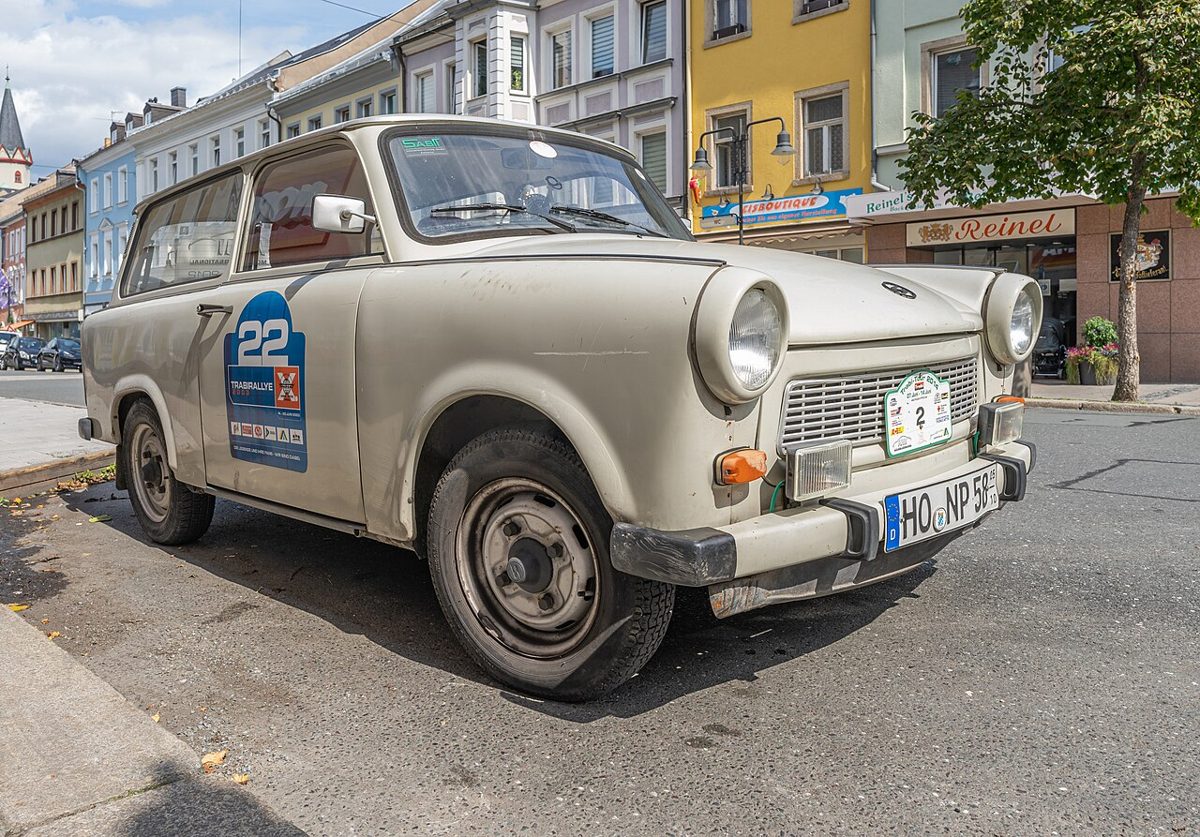
Every air-cooled community has its outliers — the cars that make people smile before they ask a technical question. In the Trabant's case the smile usually comes first and the technical question follows about ten seconds later: is that really air-cooled? It is. From 1957 until 1991 the little car from Zwickau, built by VEB Sachsenring Automobilwerke, carried a small, transversely mounted, air-cooled two-stroke engine behind the front axle, cooled by a belt-driven fan and a great deal of optimism. No radiator, no coolant, no water pump, no thermostat housing to corrode. Just fins, a fan shroud and a lot of noise.
That makes the Trabant a genuine member of the air-cooled family, even if it sits at the far end of the table from a Porsche 911 or a VW Beetle. It is the people's air-cooled car: roughly three million built, a waiting list measured in years, and a design that barely changed for nearly three decades. For anyone who loves the simplicity of fins and fans, the Trabant is a masterclass in doing more with less — and a reminder that air cooling was never only a performance choice. It was an industrial strategy.
From Pre-War Plans to the P50
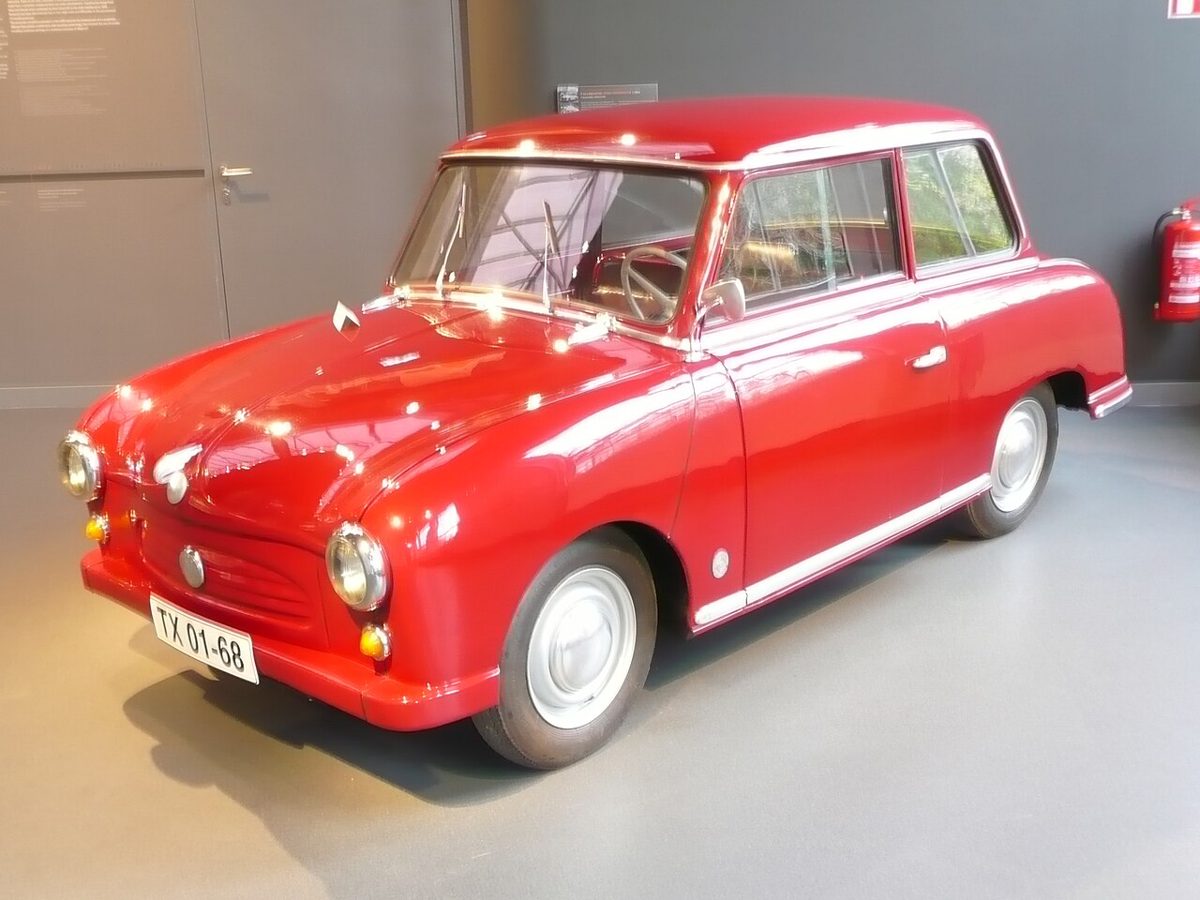
The story starts before the Trabant name existed. Zwickau had been an automobile town since the Horch and Audi days, and after the Second World War the factories in Saxony were merged into the state-owned IFA combine. The first post-war product, the AWZ P70 of 1955, already pointed the way: a small car with a transverse two-stroke engine and a body of Duroplast, a phenol-resin composite reinforced with cotton waste. Duroplast was chosen for practical reasons — steel sheet was rationed and hard to get in the GDR — but it turned out to be remarkably durable, and it gave the later Trabant its characteristic dull, slightly wobbly panels.
The P50 arrived in 1957 as the logical next step. It kept the Duroplast body and the two-stroke layout but wrapped them in a cleaner, more modern three-box shape with a pontoon front, a proper boot and room for four. Under the bonnet sat a new 500 cc three-cylinder two-stroke producing around 18 horsepower, driving the front wheels through a four-speed gearbox. Cooling was by a fan mounted on the engine, blowing air across the finned cylinders — the same principle used by a Beetle or a Citroën 2CV, packaged in a much smaller space.
The P50 was not fast. It was not meant to be. It was meant to be light, cheap, repairable and able to cope with East German roads, East German fuel and East German winters. It did all of those things, and it did them with a two-stroke exhaust note that has since become one of the most recognisable sounds in European motoring.
The Anatomy of a Two-Stroke Air-Cooled Engine
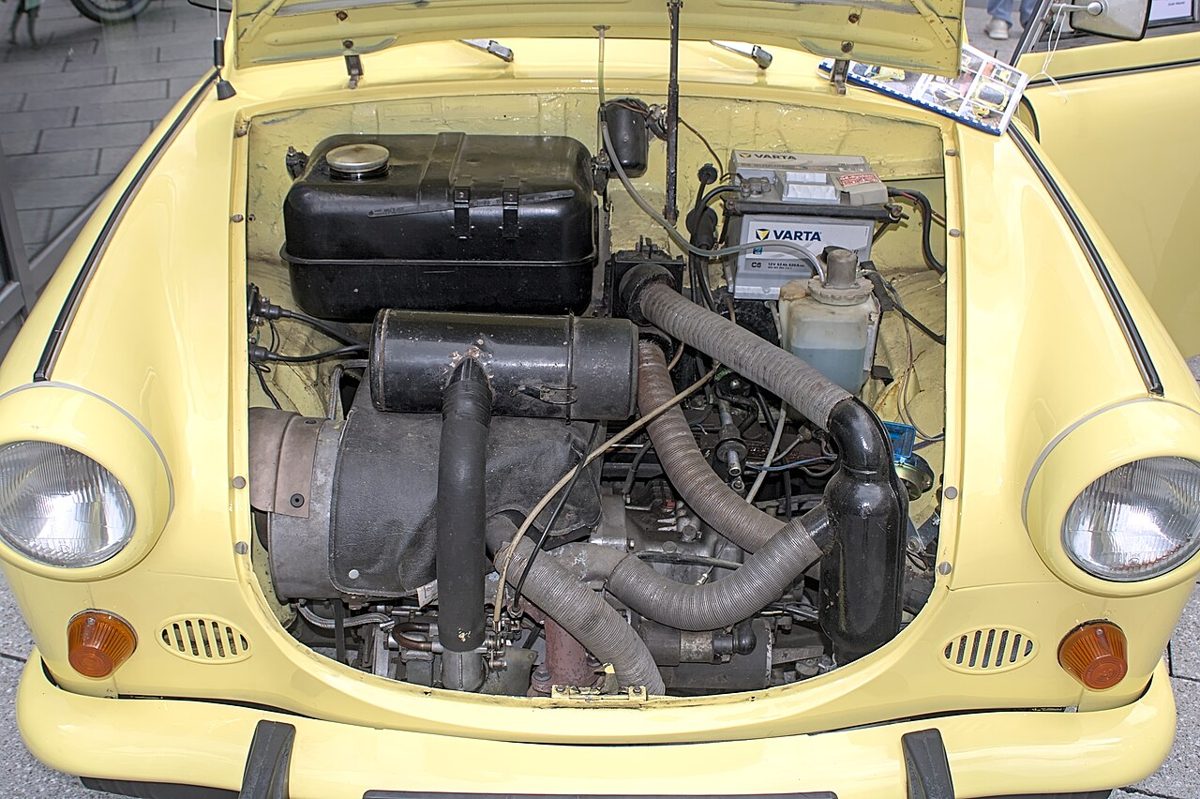
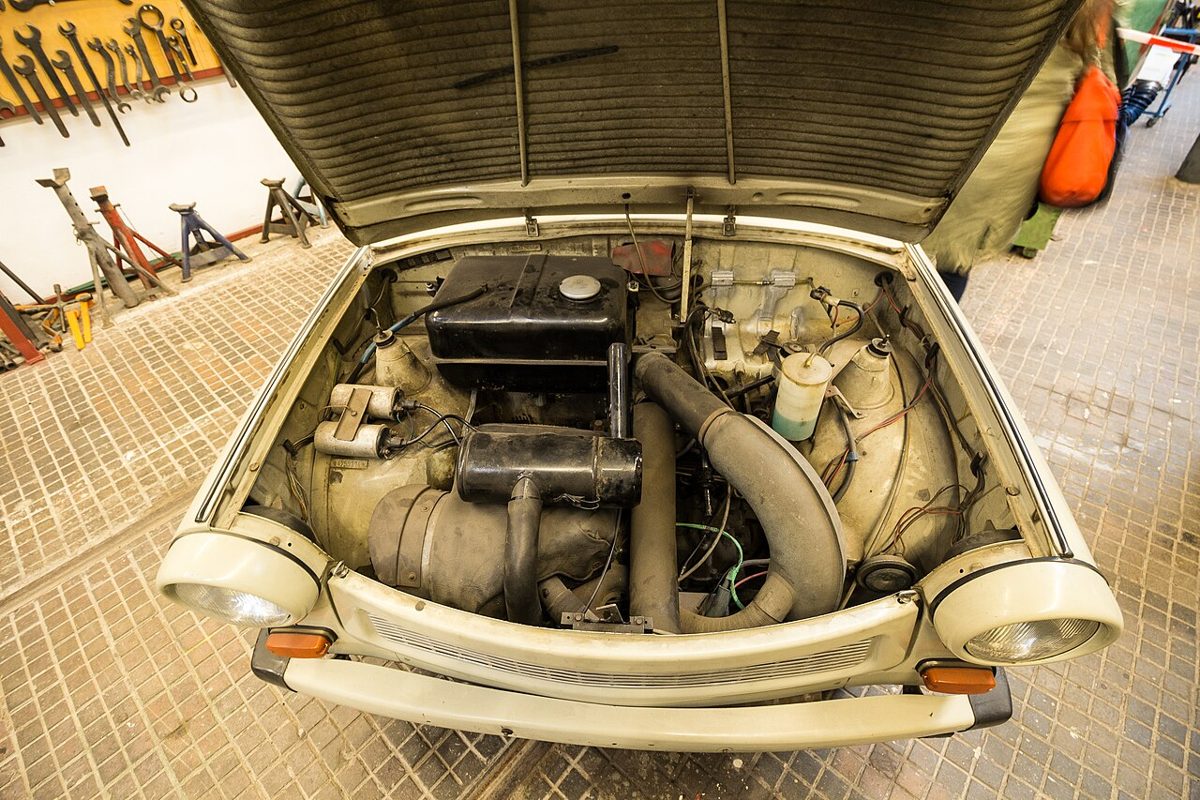
The Trabant engine is a beautiful piece of packaging. The three cylinders sit in a single block with the crankshaft running across the car, the gearbox bolted to one end and the final drive integrated into the same casing. Because the engine is transverse and the car is front-wheel drive, there is no propshaft and no differential tunnel — the floor stays flat and the cabin stays roomy for a car of its size. The whole power unit is compact enough that a determined owner can lift it out with a hoist and a friend.
Cooling comes from a fan driven by a V-belt from the crankshaft, sitting inside a sheet-metal shroud that forces air over the finned cylinders and heads. There is no water jacket to leak, no radiator to clog and no coolant to freeze. In a country where antifreeze was sometimes scarce, that mattered. The two-stroke also had no valves, no camshaft and no oil pump in the modern sense: lubrication came from oil mixed into the fuel, which meant the owner's right foot and a measuring jug were part of the service schedule.
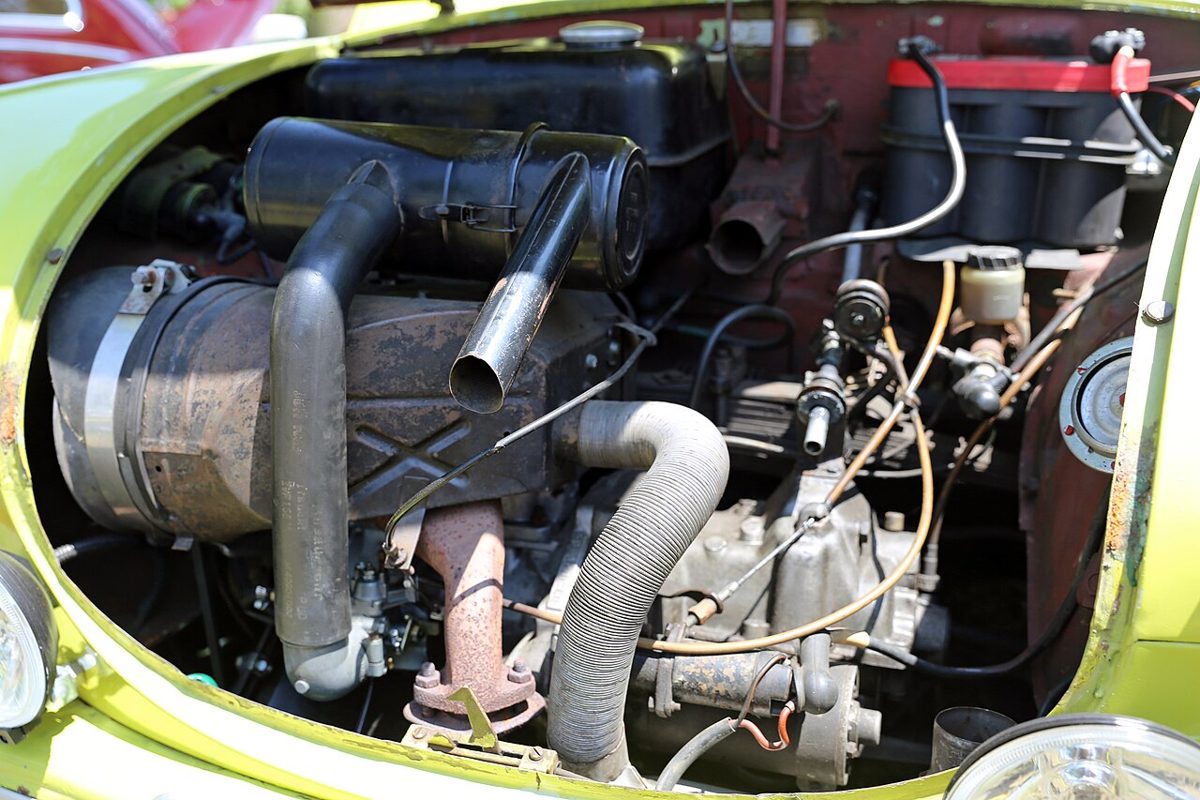
The trade-offs were real. Two-strokes are thirsty at part throttle, smoky when cold and loud at speed, and the Trabant's 500 cc triple was no exception. But the engineering logic was sound: fewer parts, fewer failure modes, and a rebuild that a competent home mechanic could manage with basic tools. For air-cooled enthusiasts, that is exactly the appeal. There is something deeply satisfying about an engine you can understand completely by looking at it.
The 601: Three Decades of Refinement
In 1964 the P50 gave way to the Trabant 601, the car that would define the brand. The new model kept the same basic recipe — Duroplast body, transverse air-cooled two-stroke, front-wheel drive — but brought a slightly larger 594 cc engine, a revised body with a more upright grille and cleaner lines, and a much wider range of variants. The 601 was offered as a two-door saloon, a three-door estate called the Universal, and later as a Kübelwagen-style open utility for the army and postal service.
Power crept up over the years, eventually reaching around 26 horsepower in the later cars, and the 601 gained detail improvements: better brakes, a hydraulic clutch in place of the earlier cable, a more civilised interior and, in the 1980s, electronic ignition on some versions. What it never gained was a fifth gear, a water-cooled engine or a fundamentally new body. The tooling was too valuable and the waiting list too long to risk a major change.
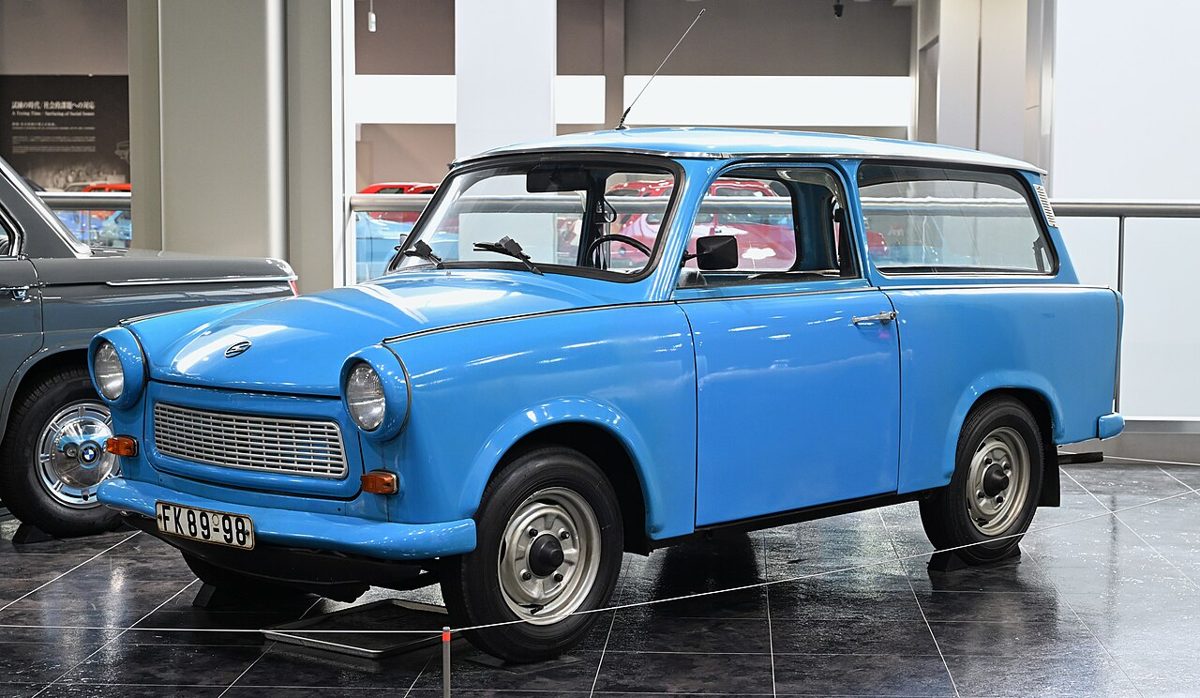
That stasis is easy to mock, but it is also the reason the Trabant is so beloved now. Every 601 is instantly recognisable, parts interchange across decades, and the owner community has built up an enormous body of knowledge about keeping them alive. The Universal in particular has become a favourite among collectors, because it turns a tiny car into a genuinely useful one — a weekend camper, a parts hauler, a family runabout.
Living With Fins and a Fan
Ask a Trabant owner what servicing is like and you will usually get a grin. The engine bay is accessible, the ignition system is simple, and the cooling fan and shroud come off with a handful of bolts. There is no coolant to bleed, no radiator cap to scald you and no water pump bearing to fail. The main rituals are mixing oil into the fuel, checking the fan belt, keeping the fins clean and listening for the change in note that tells you something is unhappy.
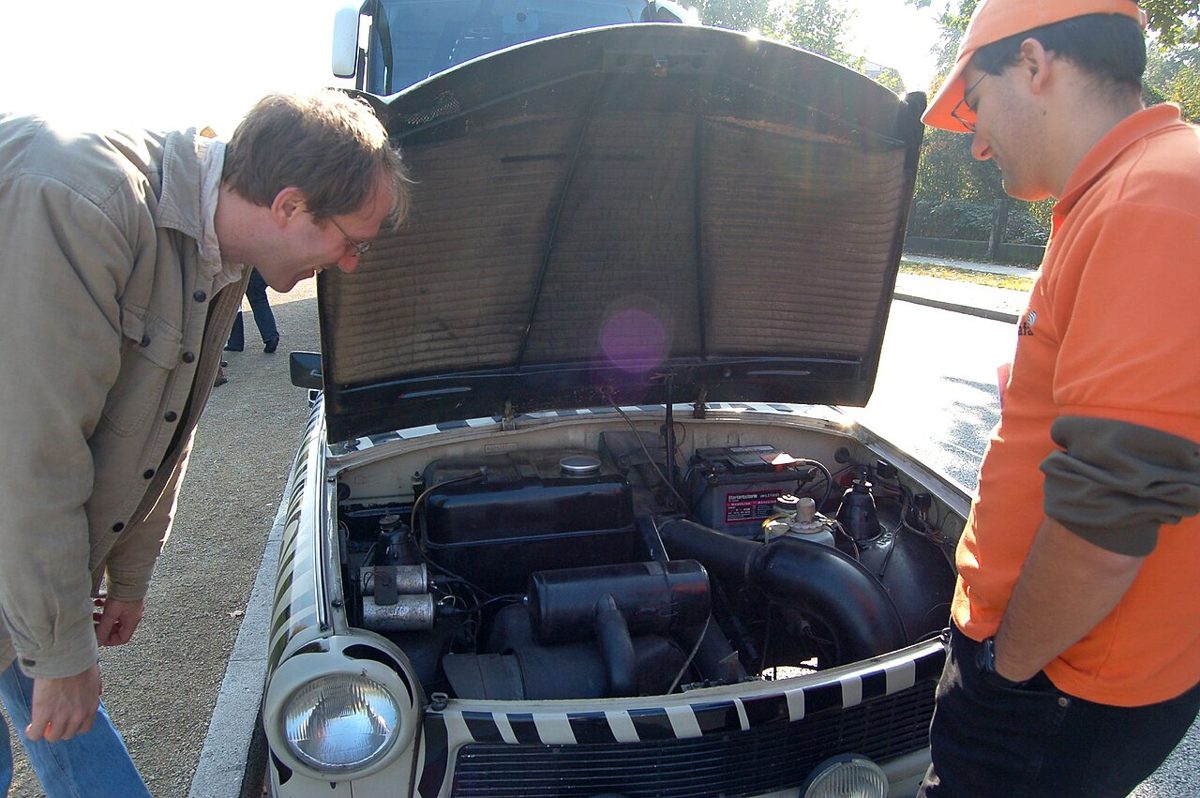
The two-stroke also rewards a particular kind of mechanical sympathy. It likes to be worked, not lugged, and it hates a lean mixture. Owners learn to read spark plugs, to set points and timing by ear and feel, and to keep a spare fan belt in the boot. In an era when modern cars need a laptop to diagnose a misfire, the Trabant asks for a screwdriver, a feeler gauge and patience — which is precisely why so many younger enthusiasts have been drawn to it.
The Duroplast body adds another layer of charm. It does not rust in the way steel does, though it can crack, fade and delaminate with age, and repairs require a different set of skills. Many owners simply live with the patina. A Trabant with a few scars and a slightly chalky finish looks exactly as it should.
Racing the People's Car
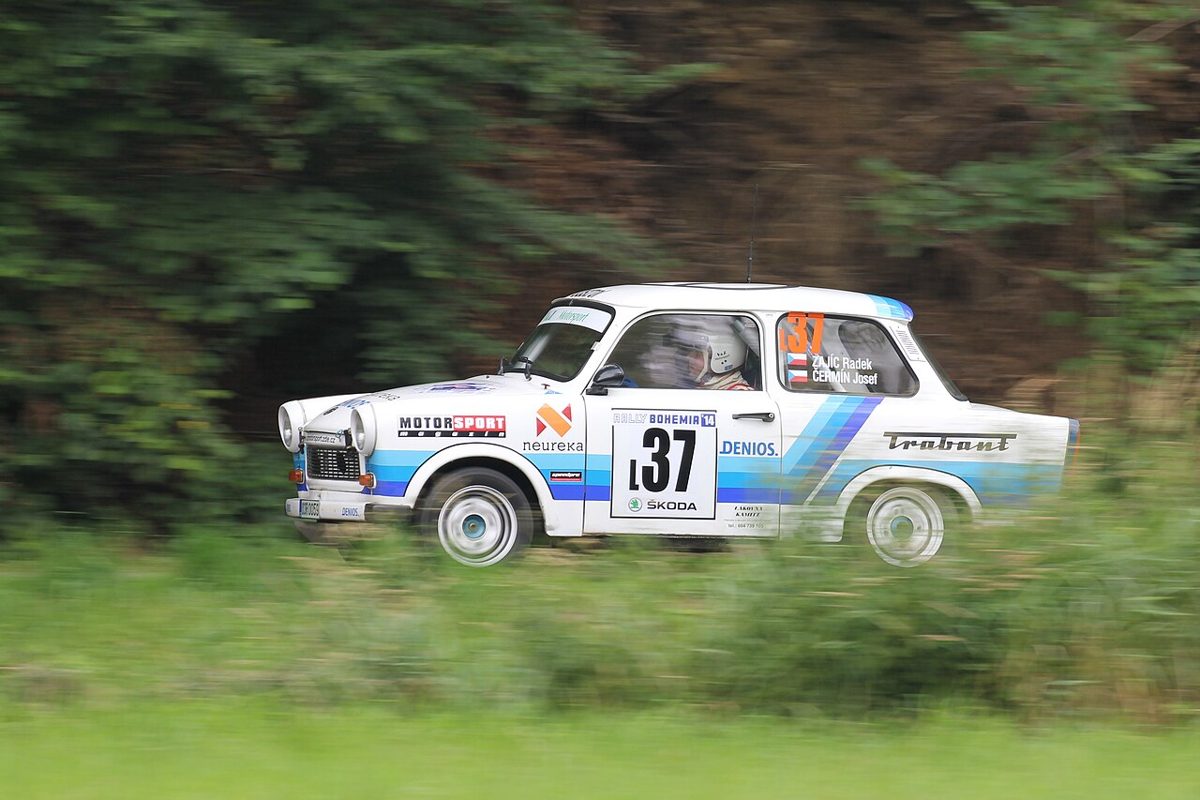
It would be easy to assume the Trabant never went racing. It did — and still does. In the GDR, the car was campaigned in rallying and circuit events, often with tuned two-stroke engines running wild port timing, bigger carburettors and expansion chambers. The lightweight body and simple layout made it a natural for club-level motorsport, and the sound of a Trabant at full throttle on a special stage is something no other car can imitate.
Today the tradition continues in historic rallying across Germany and the Czech Republic. The Trabant 601 R and similar cars appear regularly at events such as Rally Bohemia, where they are cheered as much for their noise and commitment as for their lap times. There is also a long-running tradition of Trabant-only rallies and gatherings, from the Erzgebirge to Hungary, where owners drive hundreds of kilometres in convoy and compare carburettor jetting in car parks.
For air-cooled enthusiasts, this is the Trabant's secret weapon. It is not a fast car, but it is a car you can race, repair and enjoy without a specialist workshop or a six-figure budget. The same fins and fan that got a family to work in 1975 can get a clubman to the finish line today.
The 1.1 and the End of an Era
By the late 1980s the writing was on the wall. Two-stroke engines were falling out of favour across Europe, emissions rules were tightening, and the Trabant's ancient design was becoming impossible to defend. Sachsenring's answer was the Trabant 1.1, introduced in 1990: the same body and chassis, but with a 1,043 cc four-stroke engine from Volkswagen, water-cooled and driving through a four-speed gearbox.
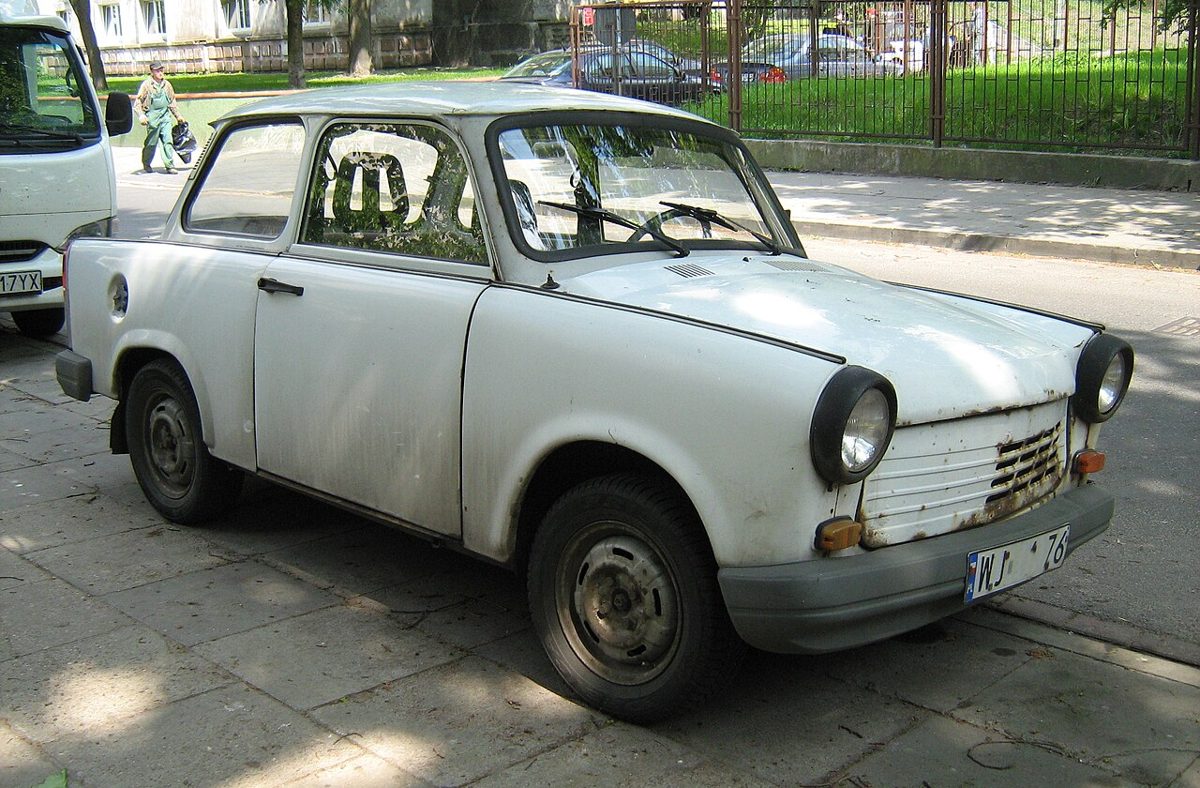
The 1.1 was smoother, quieter and cleaner, but it arrived too late. German reunification in 1990 opened the market to Western cars overnight, and buyers who had waited years for a Trabant suddenly had a choice. Production ended in 1991 after roughly 3.7 million Trabants of all types had been built. The Zwickau plant was eventually taken over by Volkswagen, and the Trabant name passed into history.
For purists, the 1.1 is the interesting anomaly: a Trabant with a radiator. It is a fascinating footnote and a reminder of how quickly the world changed around the little air-cooled car. But when people say Trabant, they mean the two-stroke — the smoky, noisy, finned, fan-cooled original.
Why We Still Love It
The Trabant is a car that refuses to be taken seriously and refuses to be dismissed. It is a piece of industrial history, a design icon, a punchline and a genuinely charming machine all at once. For air-cooled enthusiasts, it offers something increasingly rare: a car whose cooling system you can see, touch and understand in an afternoon. No coolant, no radiator, no electronics between your right foot and the road.
It also carries a cultural weight that few small cars can match. The Trabant is the car of the GDR, of the fall of the Berlin Wall, of families crossing borders in a tiny Duroplast shell, and of a generation of owners who kept them running long after the factory closed. Whether you own a concours 601, a ratty Universal or a rally-prepared 601 R, you are part of a community that values simplicity, ingenuity and a very particular exhaust note.
So welcome to the air-cooled corner of the Trabant world. Whether you are here to learn how the fan shroud works, to find a source for a fan belt, or simply to enjoy the sound of a three-cylinder two-stroke at full chat, you are among friends. The fins are small, the fan is loud, and the smile is guaranteed.
Image credits
- COVER: A Trabant 601 S in period-correct light paint, photographed at a classic-car gathering — PantheraLeo1359531, CC BY 4.0
- IMG1: Trabant P50 — the 1958 original with its three-cylinder 500 cc air-cooled two-stroke — Alexander-93, CC BY-SA 4.0
- IMG2: Trabant P50 prototype ('Funktionsmuster') on display in a museum — Rainerhaufe, CC BY-SA 4.0
- IMG3: 1960 Trabant P50-1 engine bay: the transverse two-stroke and its cooling fan — Mr.choppers, CC BY-SA 3.0
- IMG4: 1965 Trabant 601 Universal estate, the practical member of the 601 family — TTTNIS, CC0
- IMG5: Engine of a Trabant 601 S used on a Dresden 'Trabi Safari' tour — ilovebutter (via Wikimedia Commons), CC BY 2.0
- IMG6: Trabant two-stroke engine and gearbox unit seen out of the car — DCB / ubahnverleih, CC0
- IMG7: Trabant 601 R rally car on the 2014 Rally Bohemia Legend — Miloslav Rejha, CC BY 4.0
- IMG8: Trabant 1.1 — the 1990 four-stroke finale, photographed in Warsaw — CZmarlin — Christopher Ziemnowicz, releases all rights but a photo credit would be appreciated if this image is used anywhere other than Wikipedia. Please leave a note at Wikipedia here. Thank you!, Public domain