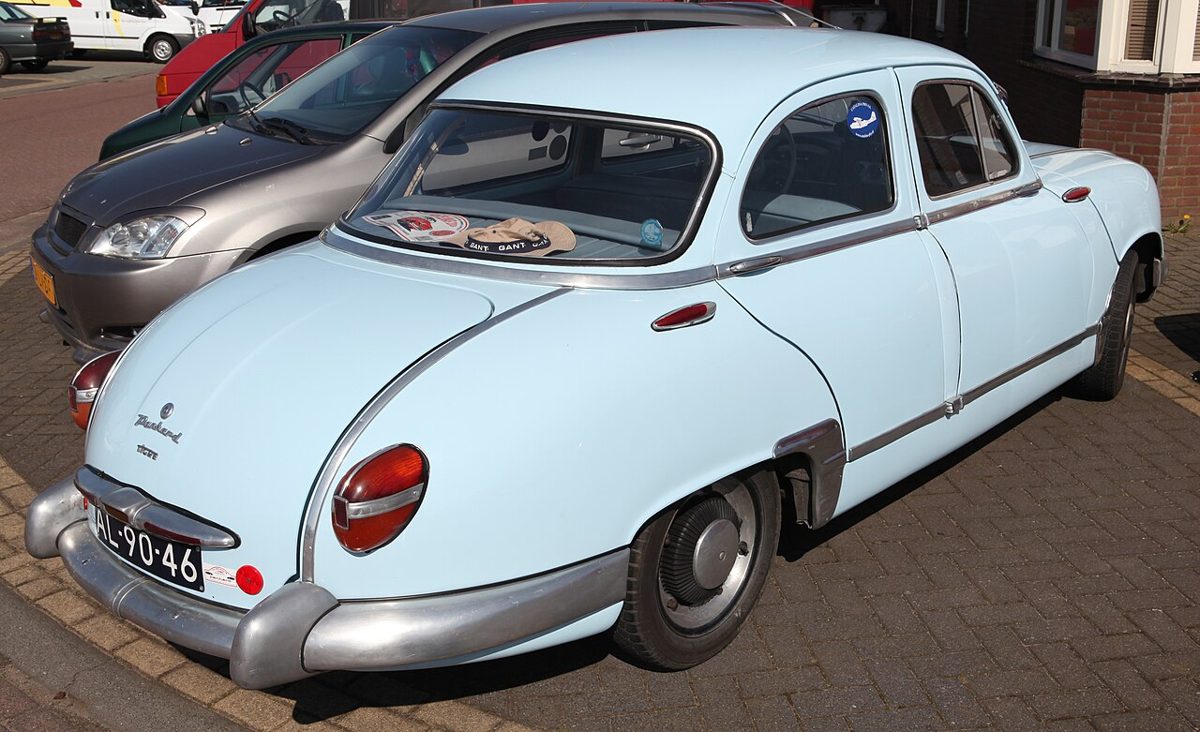
There is a particular sound that follows a Panhard down a country road: a soft, busy, slightly metallic flutter, like a sewing machine that has learned to breathe. It comes from two air-cooled cylinders lying flat, tucked low in the nose of a car that looks like nothing else on the road. For air-cooled people, Panhard is the great French outlier — a marque that spent its entire post-war life building light, aluminium-bodied cars around an air-cooled flat-twin, and in doing so produced some of the most aerodynamic and quietly radical machines of the 1950s.
This is the story of that era: from the Dyna X of 1946 to the last 24 CT of 1967, from a bombed-out factory in the Paris suburbs to the Le Mans pit lane and the Monte Carlo stages.
A Survivor's Company
Panhard & Levassor was one of the oldest names in the automobile. Founded in 1887, it built the world's first series-production car with a front-mounted engine and a conventional gearbox, and by the early twentieth century it was a grand marque of large, expensive, sleeve-valve cars. Then came the Second World War, the occupation of Paris, and in 1944 the bombing of the company's factory at Porte d'Ivry. What survived was a firm with a proud name, a badly damaged plant, and a France that had almost no money and very little petrol.
Those constraints shaped everything. The post-war French government's Pons Plan pushed makers toward small cars, and Panhard's answer was to think small in the most sophisticated way possible: a light car with an aluminium body, a tiny air-cooled engine, and aerodynamics that would embarrass cars twice its size.
The Dyna X: Aluminium and Air
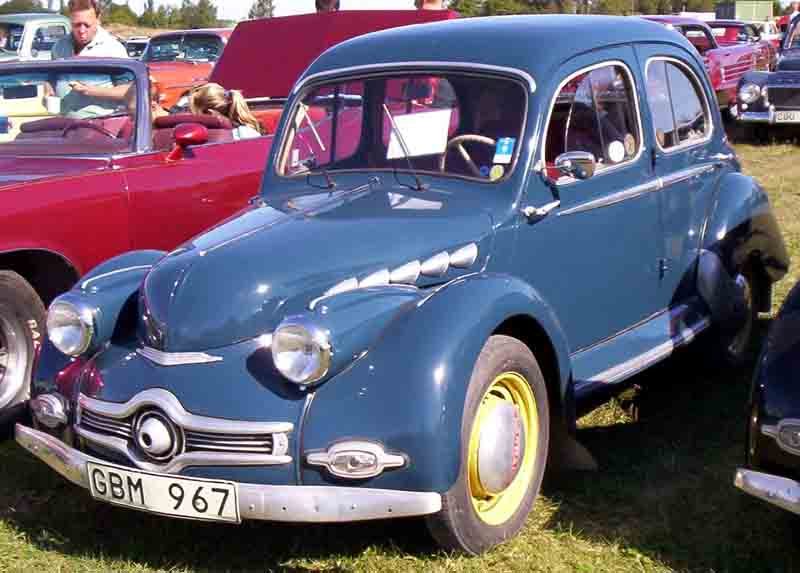
The Dyna X arrived in 1946, designed under the engineer Jean-Albert Grégoire's influence and refined by Panhard's own team. It was a small, rounded saloon with an aluminium body and chassis structure, weighing in the region of 600 kg, powered by a 610 cc air-cooled flat-twin mounted ahead of the front axle. Power went to the front wheels through a four-speed gearbox. In a country where steel was rationed and fuel was scarce, a light aluminium car with a tiny air-cooled engine was not a compromise — it was a strategy.
Over its life the Dyna X grew in capacity and power: 610 cc, then 745 cc, then 851 cc, with outputs climbing from around 22 hp to roughly 42 hp in the later X86 and X87 versions. The sporting Junior roadster and the little utility versions broadened the range. The Dyna X was never fast in absolute terms, but it was light, revvy and remarkably economical, and it established the template — flat-twin, air-cooled, front-wheel drive, aluminium — that Panhard would follow for two decades.
Refinement and Export: The Canadienne
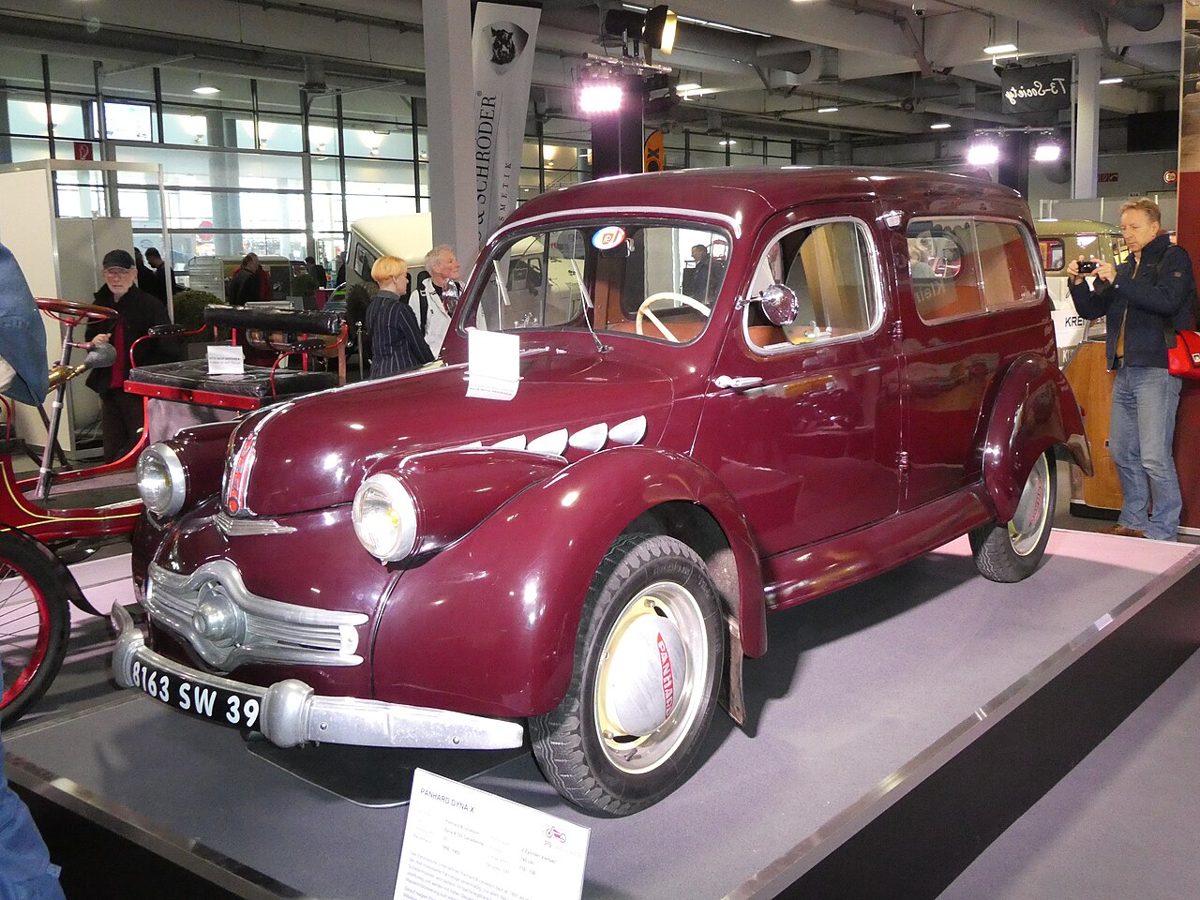
Panhard understood that a small air-cooled car needed to feel less utilitarian than it was. The Dyna X 120 Canadienne, built for the Canadian market and named for the country that took to it, added a little more power and a good deal more trim. It is a lovely illustration of how the marque worked: the same fundamental mechanical package, dressed and tuned for a distant customer who wanted a small, economical car that still looked and felt special.
For an air-cooled enthusiast, the Canadienne is a reminder that Panhard's flat-twin was never a cheap afterthought. It had a proper crankshaft, proper bearings and a willingness to rev that made it feel far more sophisticated than its displacement suggested. Owners learned to love the light flywheel, the quick throttle response and the way the engine's note changed as the revs rose.
The Dyna Z: A Shape From the Wind Tunnel
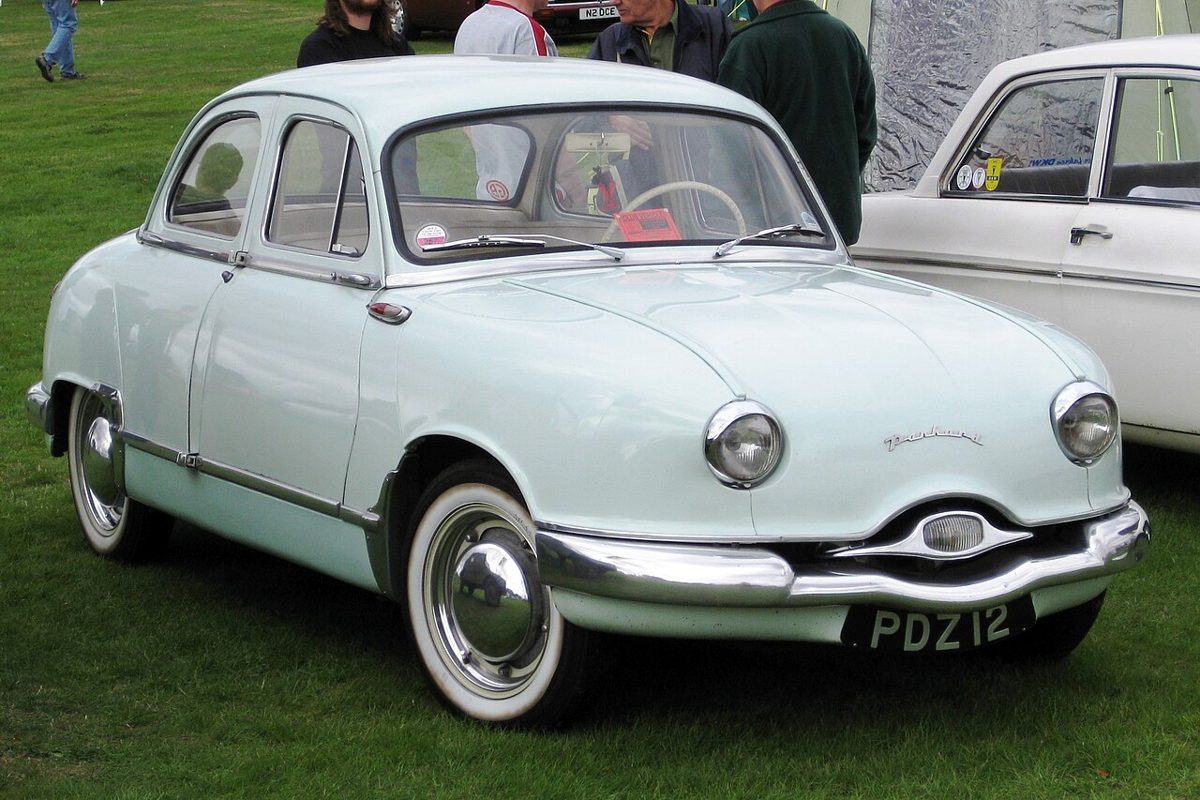
In 1953 Panhard replaced the Dyna X with the Dyna Z, and the company's aerodynamic ambitions came fully into focus. The Dyna Z was a six-light saloon with a body that looked as if it had been smoothed by water: a low, rounded nose, a curved windscreen, flush sides and a tapering tail. It was one of the most aerodynamically efficient production cars of its day, and it was still built largely in aluminium.
Underneath sat the familiar air-cooled flat-twin, now at 851 cc and producing around 42 hp in standard form. That sounds modest, and it was — but the Dyna Z weighed only about 800 kg, and its drag coefficient was low enough that it could cruise at speeds that surprised larger cars. The engine was mounted ahead of the front axle, driving the front wheels through a four-speed gearbox, and the whole package was tuned for economy and easy long-distance travel rather than outright acceleration.
The Dyna Z also introduced Panhard's characteristic interior layout: a wide, flat dashboard, a bench-like front seat in early cars, and a feeling of space that belied the car's compact exterior. It was a family car that happened to be an aerodynamic experiment, and it sold well enough to keep the factory busy through the 1950s.
Details That Made a Difference
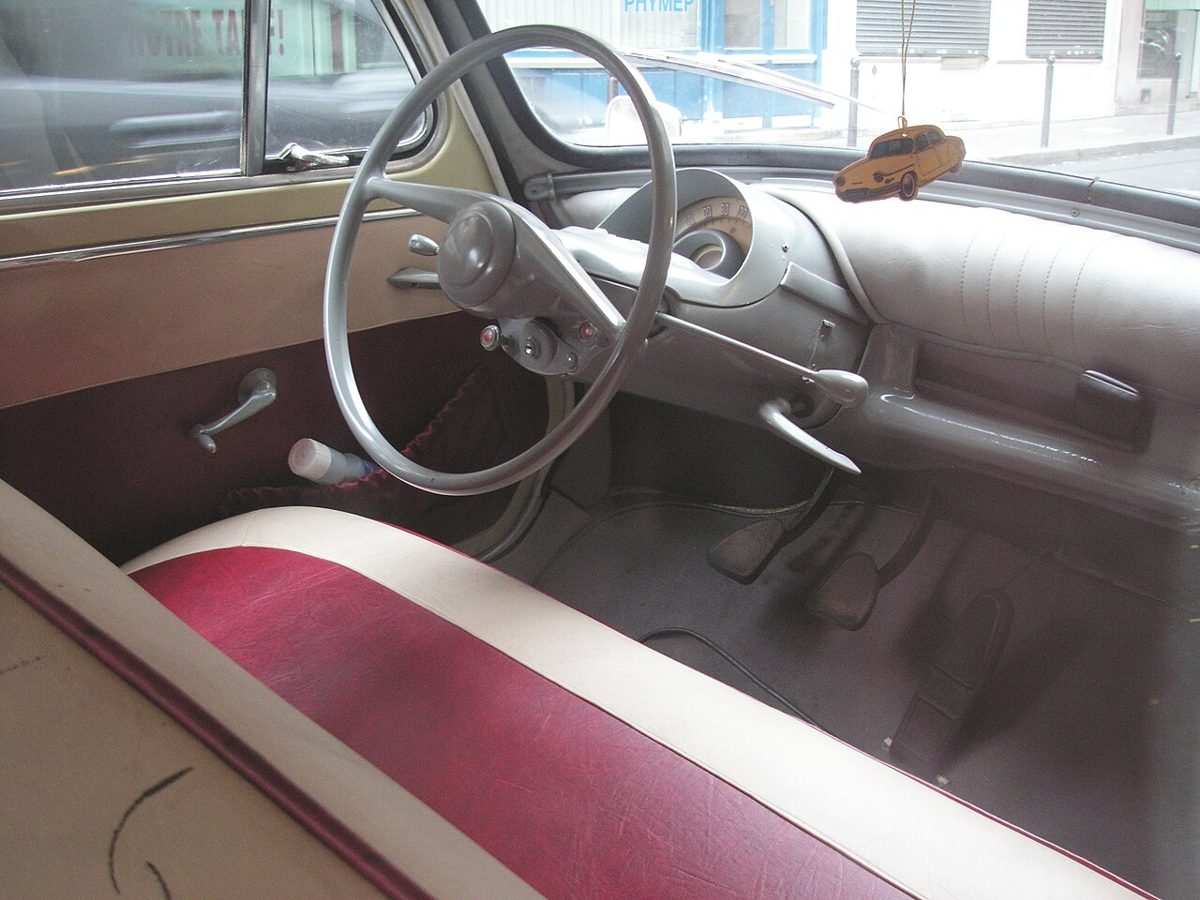
Look closely at a Dyna Z and the engineering philosophy becomes clear. The rear of the car tapers into a rounded tail with small, high-mounted lights, and the rear wheels sit well inboard, partly enclosed by the bodywork. The aluminium panels are thin and light, the doors close with a distinctive light clatter, and the whole car seems designed around the idea that less weight is better than more power.
That philosophy extended to the engine. The flat-twin was air-cooled, with a large cooling fan driven from the crankshaft and finned cylinders that sat low and wide in the engine bay. There was no radiator, no water pump, no coolant to freeze or boil — just air, moving steadily over hot metal. For anyone who has spent a weekend chasing a coolant leak, the appeal is obvious.
The PL17: The Flat-Twin Grows Up
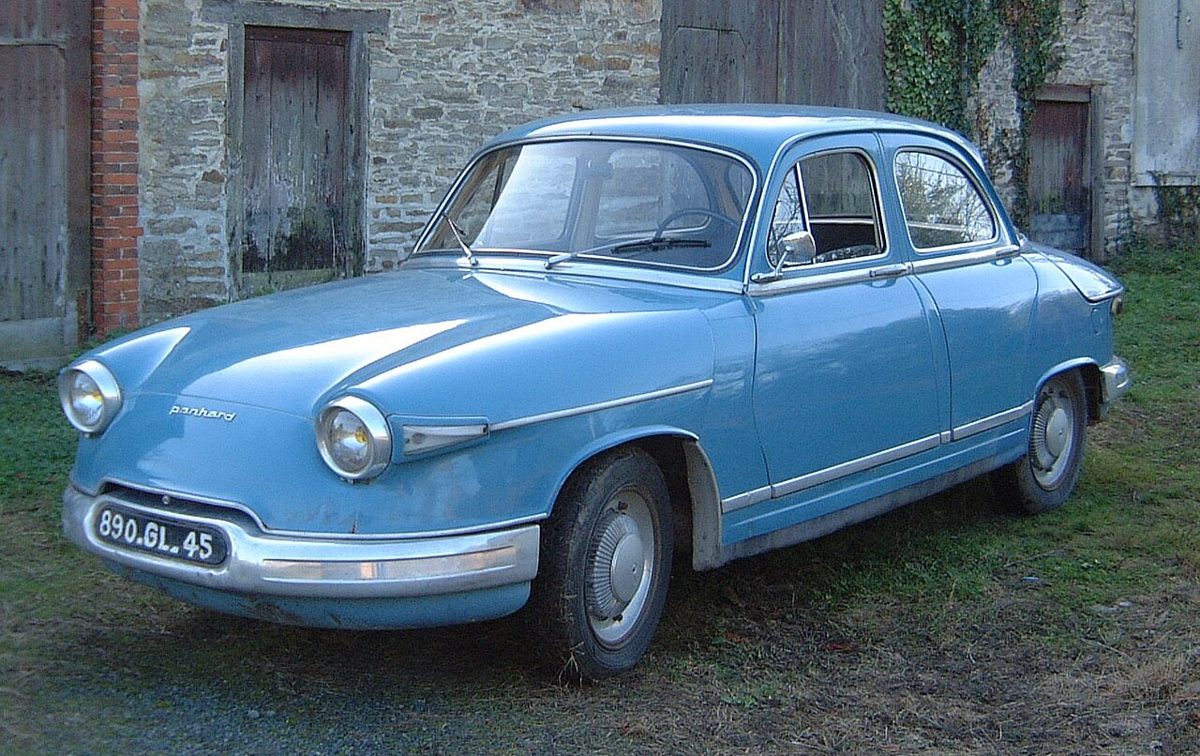
In 1959 Panhard launched the PL17, the car that many consider the definitive expression of the marque. It took the Dyna Z's aerodynamic body and gave it a sharper, more modern front end, a wider track, and a revised 848 cc air-cooled flat-twin. In standard form it produced around 42 hp; the sporting Tigre version, with higher compression and a hotter camshaft, pushed toward 50 hp and beyond in later tune.
Panhard also offered the PL17 in a wide range of body styles, from the practical four-door saloon to the charming cabriolet and the estate-like break, and the mechanical package stayed reassuringly familiar across the range. The flat-twin sat ahead of the front axle, the four-speed gearbox lived behind it, and the aluminium body kept weight down to roughly 800 kg. That combination gave the PL17 a lively, almost eager character in town and a relaxed, long-legged gait on the open road.
The PL17 was a genuinely comfortable four-door family car that could carry five people and their luggage at highway speeds while returning remarkable fuel economy. Its ride was soft, its steering light, and its engine — mounted ahead of the front axle — gave it a sure-footed feel on loose surfaces. The Tigre versions became favourites of rally drivers and of anyone who wanted a small car that could punch above its weight.
Inside the Air-Cooled Flat-Twin
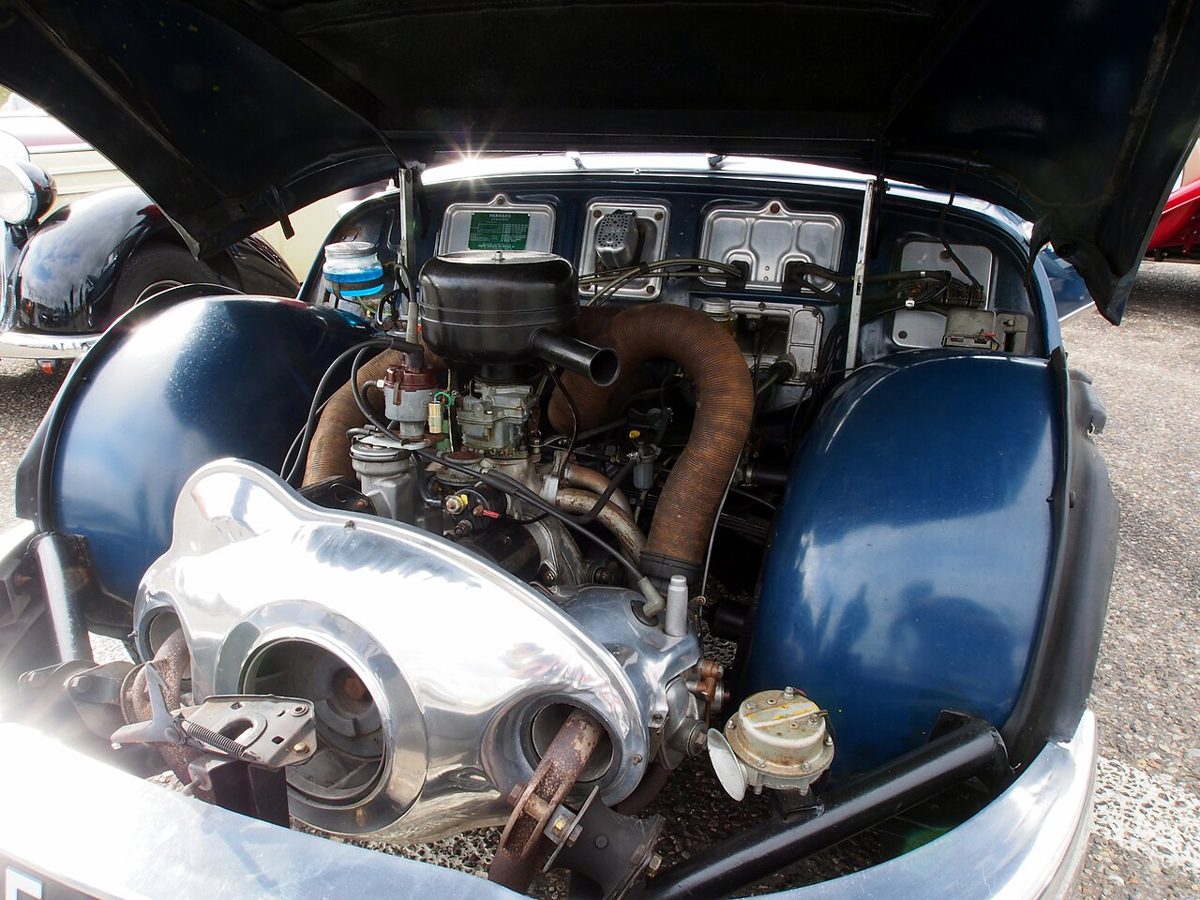
Open the bonnet of a PL17 and the layout is immediately recognisable to anyone who loves air-cooled machinery. The flat-twin sits low and wide, its two finned cylinders lying horizontally, with the cooling fan and shroud at the front and the carburettor and distributor arranged for easy access. The engine is compact, light and mechanically straightforward: two cylinders, opposed, with a single central crankshaft and pushrod-operated valves.
What makes it special is the way it was developed. Panhard's engineers kept raising compression, improving breathing and lightening internals, extracting more and more from a tiny displacement. The result was an engine that loved to rev, sounded unlike anything else, and — crucially — was simple enough for an owner to maintain at home. Valve clearances, points, plugs and a fan belt: that was most of the routine work. In an era of increasingly complicated water-cooled engines, the Panhard flat-twin remained refreshingly honest.
Rallying, Racing and the Monte
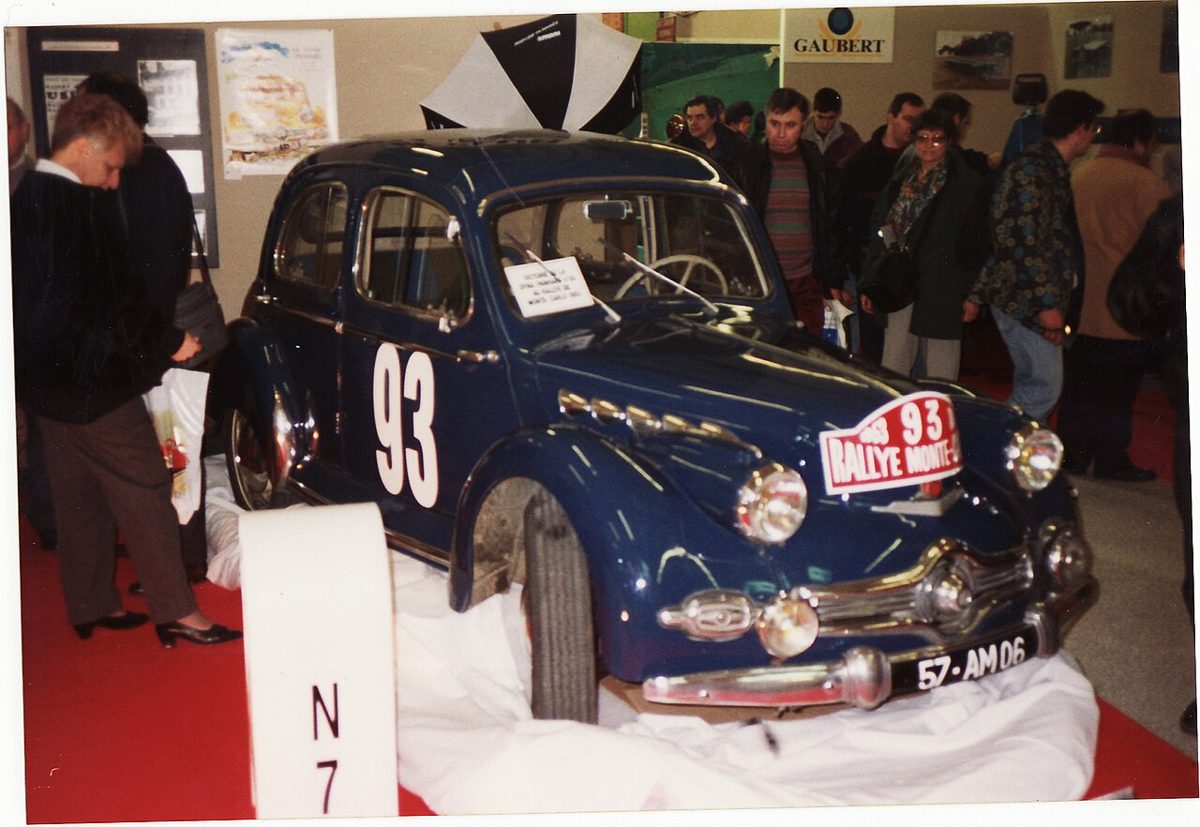
Panhard's light weight and sure-footed front-wheel drive made its cars natural rally machines. Dyna Xs and Dyna Zs were campaigned in the Monte Carlo Rally and other European events, and the marque built a reputation for punching far above its class. The combination of a revvy air-cooled engine, a light aluminium body and front-wheel-drive traction was well suited to slippery mountain roads, and Panhard drivers became a familiar sight on the special stages.
The company also went racing. Panhard built sports-racing cars with tuned flat-twins and, later, with more exotic powerplants, and its cars appeared at Le Mans and in sports-car events through the 1950s. The competition programme was never a match for the budgets of the big manufacturers, but it gave the marque a sporting credibility that helped sell the road cars — and it proved that an air-cooled flat-twin could be made to perform.
The 24 CT: A Last, Beautiful Flourish
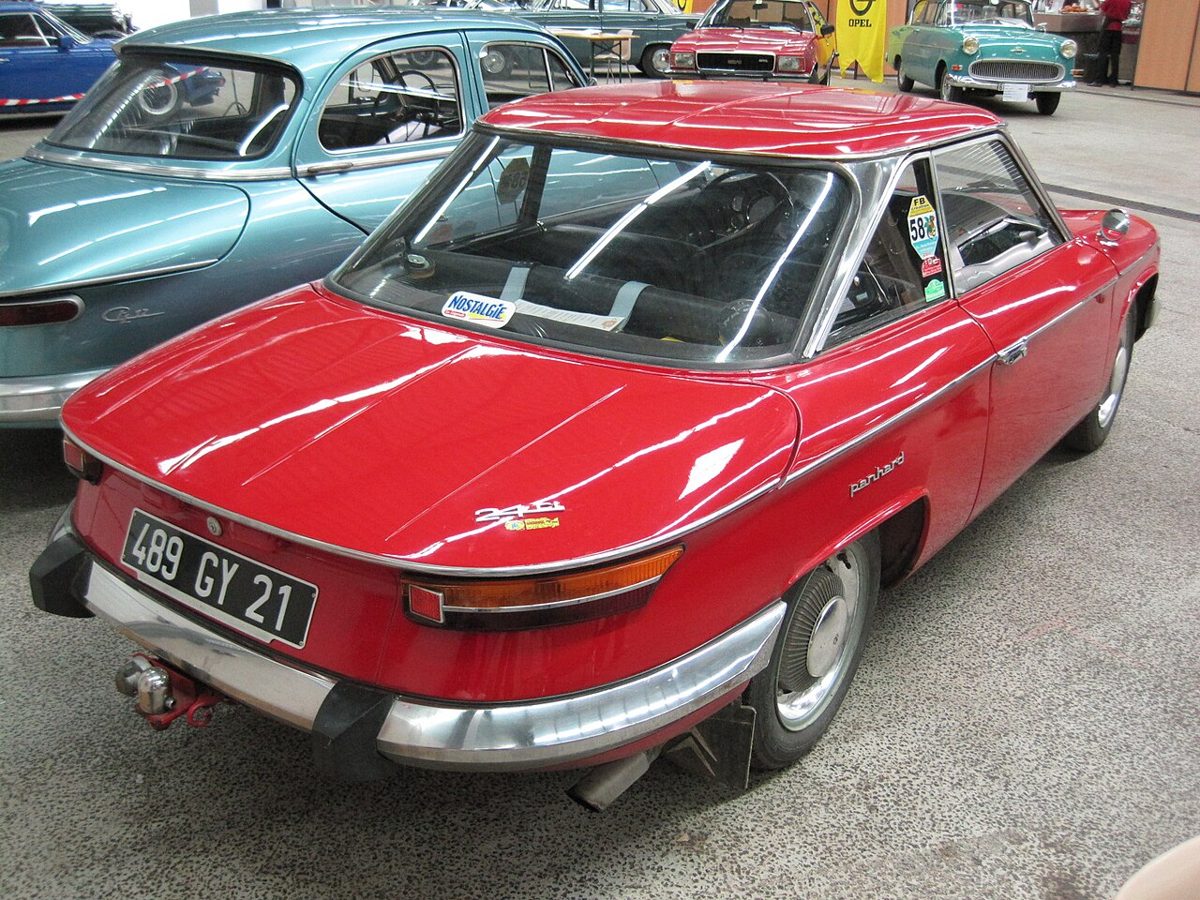
By the early 1960s Panhard was in trouble. The company had been absorbed into the Citroën orbit, and its small cars were increasingly overshadowed by the larger, cheaper-to-build models from the parent firm. The answer, launched in 1964, was the 24 — a sleek, low coupe and saloon with a sharp, almost Italianate shape and a choice of 848 cc flat-twin engines: the 24 BA and 24 BT with around 50 hp, and the sporting 24 CT with a twin-carburettor Tigre engine producing around 60 hp.
The 24 CT was the fastest and most glamorous Panhard ever built around the air-cooled flat-twin. It was light, aerodynamic and beautifully proportioned, with a low roofline and a wide, confident stance. It was also expensive for what it was, and sales never matched the company's hopes. Production ended in 1967, and with it the era of the Panhard air-cooled car came to a close.
Why Panhard Still Matters
Panhard's air-cooled years are a masterclass in doing more with less. The company had no money for big engines, so it made its cars light. It had no money for complex cooling systems, so it used air. It had no money for wind tunnels full of expensive prototypes, so it shaped its cars with an almost obsessive attention to drag. The result was a family of cars that were economical, durable, comfortable and — in the right hands — genuinely quick.
The marque's legacy lives on in the workshops and club gatherings where these cars are still maintained by hand. Spares are scarcer than they once were, but the flat-twin's simplicity means that a determined owner can keep one running with basic tools and a good manual. That self-reliance is part of the appeal: these are cars you can understand completely, from the fan shroud to the rear-mounted gearbox, without a diagnostic computer in sight.
For air-cooled enthusiasts, Panhard offers something rare: a European flat-twin tradition that is every bit as characterful as the more famous rear-engined cars, but with front-wheel drive, aluminium bodies and a distinctly French sense of style. The engine note is unmistakable, the engineering is honest, and the cars are still affordable enough for a dedicated owner to enjoy.
Whether it is a rounded Dyna X, a wind-cheating Dyna Z, a rally-bred PL17 Tigre or a sleek 24 CT, every Panhard carries the same idea under its bonnet: two cylinders, lying flat, cooled by nothing more than moving air. That is a heritage worth celebrating — and, for those of us who love air-cooled machinery, a heritage worth keeping on the road.
Image credits
- COVER: Panhard Dyna Z (Tigre-engined) in a front three-quarter view — Joost J. Bakker from IJmuiden, CC BY 2.0, via Wikimedia Commons
- IMG1: Panhard Dyna X 86 four-door sedan, 1951 — Lars-Göran Lindgren Sweden, CC BY-SA 4.0, via Wikimedia Commons
- IMG2: Panhard Dyna X 120 Canadienne, 1952 — Andrew Bone from Weymouth, England, CC BY 2.0, via Wikimedia Commons
- IMG3: Panhard Dyna Z, 851 cc, built 1958 — Charles01, CC BY-SA 3.0, via Wikimedia Commons
- IMG4: Panhard Dyna Z rear view — Ton1~commonswiki, CC BY-SA 3.0, via Wikimedia Commons
- IMG5: Panhard PL17, 1964, front view — Guillaume27 at English Wikipedia, CC BY-SA 3.0, via Wikimedia Commons
- IMG6: Panhard PL17 L1 air-cooled flat-twin engine, 1959 — Alf van Beem, CC0, via Wikimedia Commons
- IMG7: Panhard Dyna X in Monte Carlo Rally livery — Andrew Bone from Weymouth, England, CC BY 2.0, via Wikimedia Commons
- IMG8: Panhard 24 CT coupe — Arnaud 25, CC0, via Wikimedia Commons