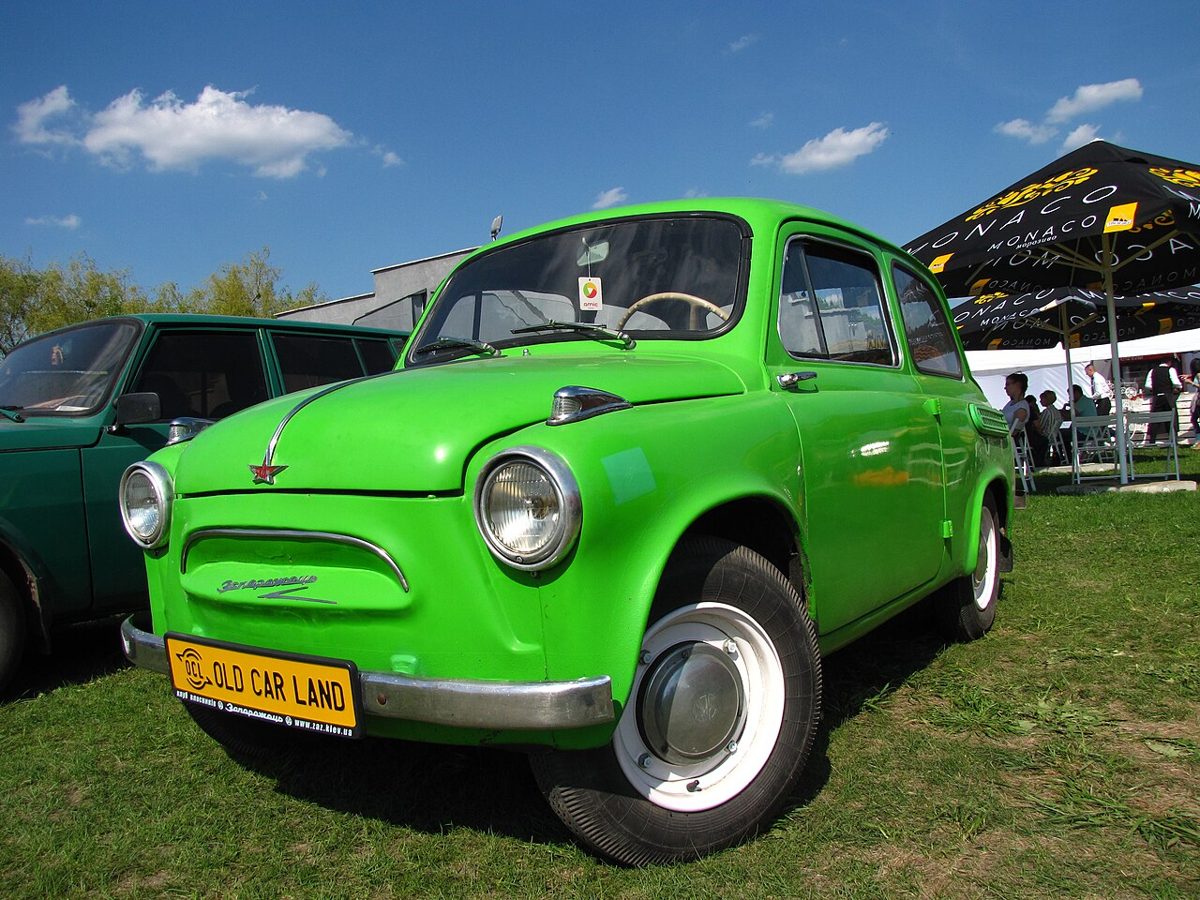
Every air-cooled community has its own folklore, and in Eastern Europe one car sits at the centre of it: the Zaporozhets. Built by ZAZ — the Zaporizhzhia Automobile Building Plant in Ukraine — the little rear-engined, air-cooled ZAZ-965, ZAZ-966 and ZAZ-968 were the Soviet Union's answer to the Volkswagen Beetle, and for three and a half decades they put millions of families on wheels with nothing more than a flat-four, a fan and a lot of ingenuity. If you have ever owned a Beetle, a Fiat 500 or a Corvair, you already understand the appeal. This is the story of the cars that brought that same philosophy to the steppe.
From Combine Factory to Car Plant
ZAZ began life in 1863 as a small agricultural equipment works in Zaporizhzhia, on the Dnieper river in what is now Ukraine. Through the 1930s it became a combine harvester plant, and it was only after the Second World War that Moscow decided the country needed a truly affordable "people's car" — a small, simple machine that could be built in enormous numbers and maintained by owners with limited tools. The first attempt, the ZAZ-965, was developed in the late 1950s and entered production in 1960. The brief was brutally simple: four wheels, four seats, an engine at the back, and as little complexity as possible.
The result borrowed unashamedly from the Italian school of small-car design — the Fiat 600's proportions are unmistakable — but the mechanical package was very much ZAZ's own. Air cooling was chosen for the same reasons Volkswagen and Porsche chose it: no radiator, no coolant, no water pump, no freeze plugs, and a car that would start in a Siberian winter and keep running in a Central Asian summer. For a country with no dense dealer network and roads that ranged from motorway to mud, that was decisive.
The ZAZ-965: The Humpbacked Zaporozhets
The ZAZ-965 went on sale in 1960 and quickly earned the nickname "Gorbaty" — the humpbacked one — for its rounded rear deck. Under that hump sat the MeMZ-965: a 746 cc air-cooled V4, mounted longitudinally behind the rear axle, driving through a four-speed manual gearbox. With around 23 horsepower it was never fast, but it was light, about 650 kg, and it would go anywhere a Trabant or a Beetle would go. Early cars had a 746 cc engine; the later ZAZ-965A moved to 887 cc and roughly 27 hp, enough for a genuine 100 km/h on a good day.
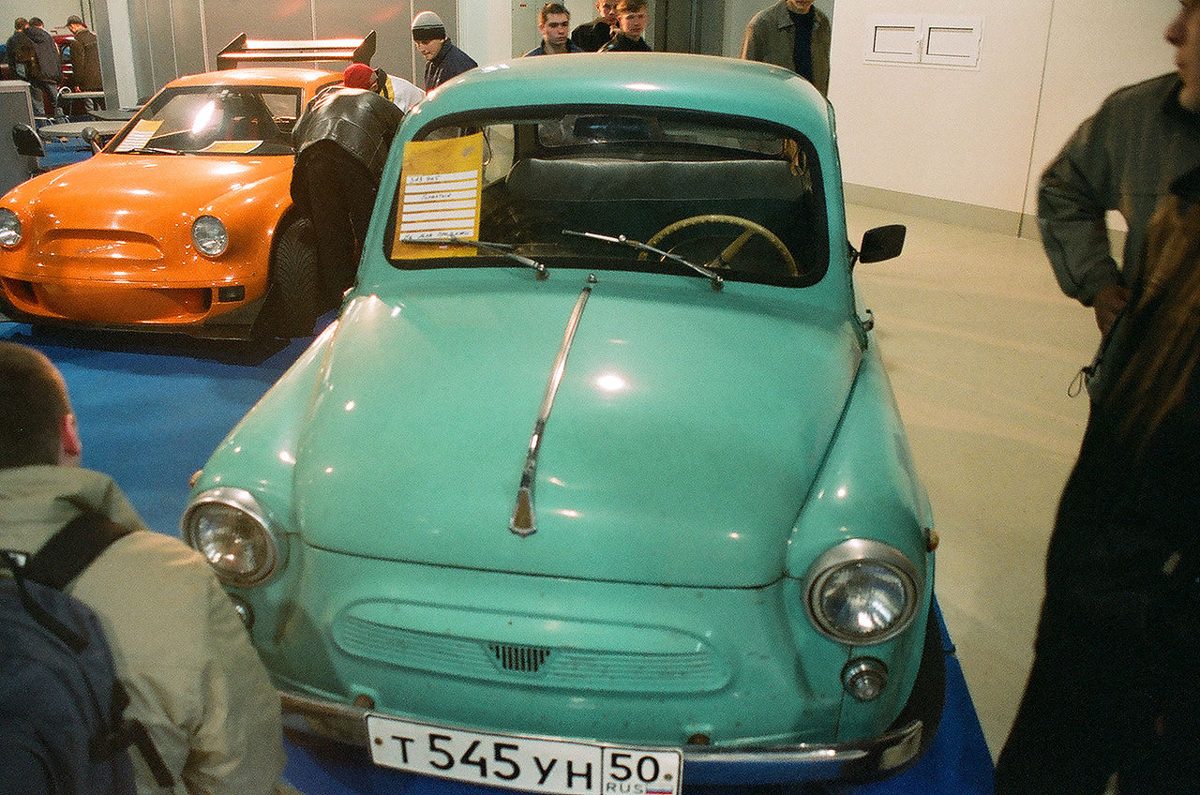
The engineering was charmingly pragmatic. The V4 was essentially half of a V8 in layout, with a single central camshaft and pushrods, cooled by a belt-driven fan blowing air over finned cylinders and heads. Suspension was independent all round — double wishbones at the front, swing axles at the rear — and the body was a monocoque, which was advanced for a car of this class in 1960. Brakes were drums, the electrics were 6-volt on early cars, and the heater was a heat exchanger fed by engine cooling air, which meant it worked best when the engine was working hardest.
What the 965 lacked in refinement it made up for in honesty. There was no pretence of luxury: simple vinyl, a single round speedometer, a bench-like rear seat and a front luggage compartment where a radiator would normally live. Enthusiasts today love it for exactly that — it is a car you can understand completely by looking at it.
Living With the Rear Engine
Anyone who has driven a rear-engined air-cooled car knows the drill: weight behind the axle means the front end goes light under power, the tail can step out in the wet, and the heater smells faintly of hot oil. The Zaporozhets is no different, and that is part of its charm. The engine sits low and compact, the fan shroud and cooling tinware are accessible through a hatch, and a valve adjustment or a set of spark plugs is a driveway job with basic hand tools.
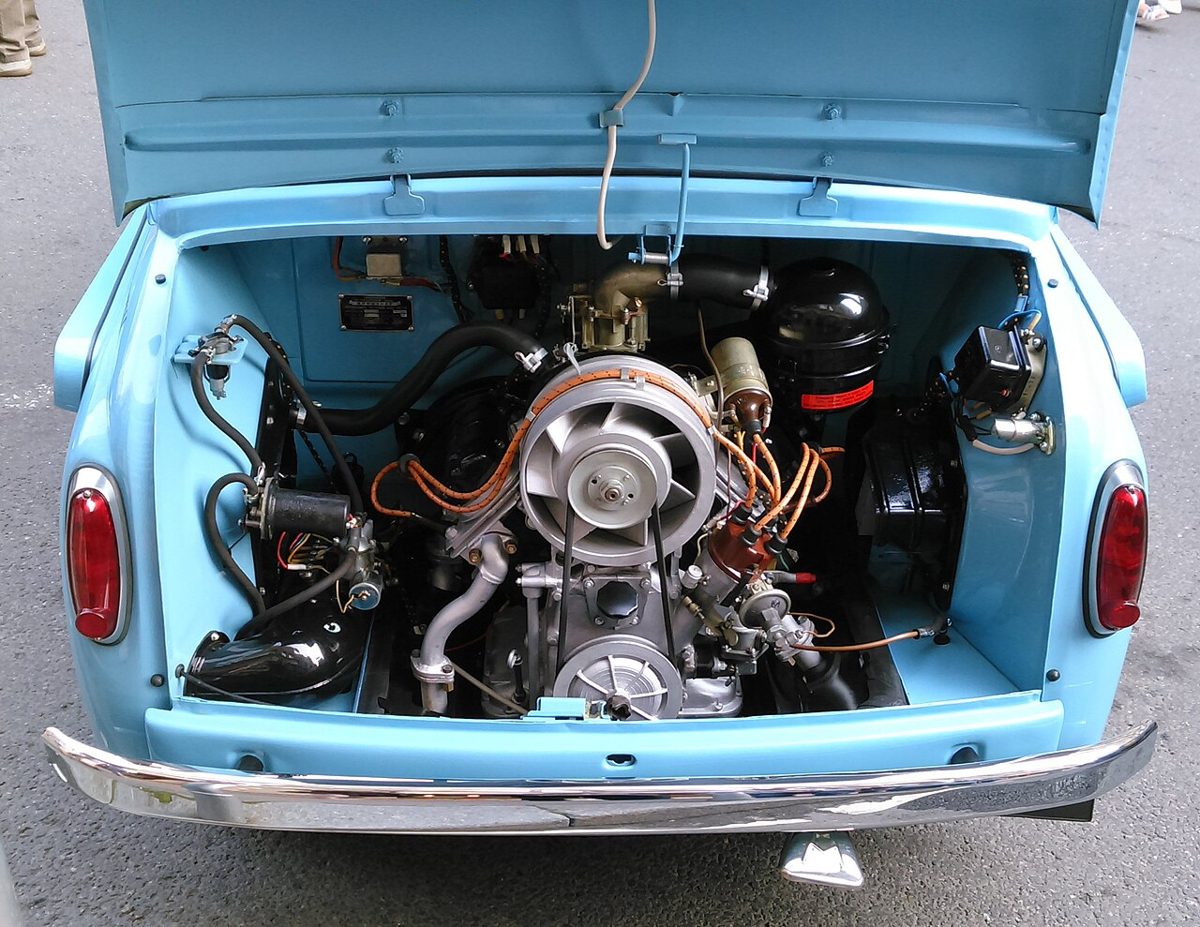
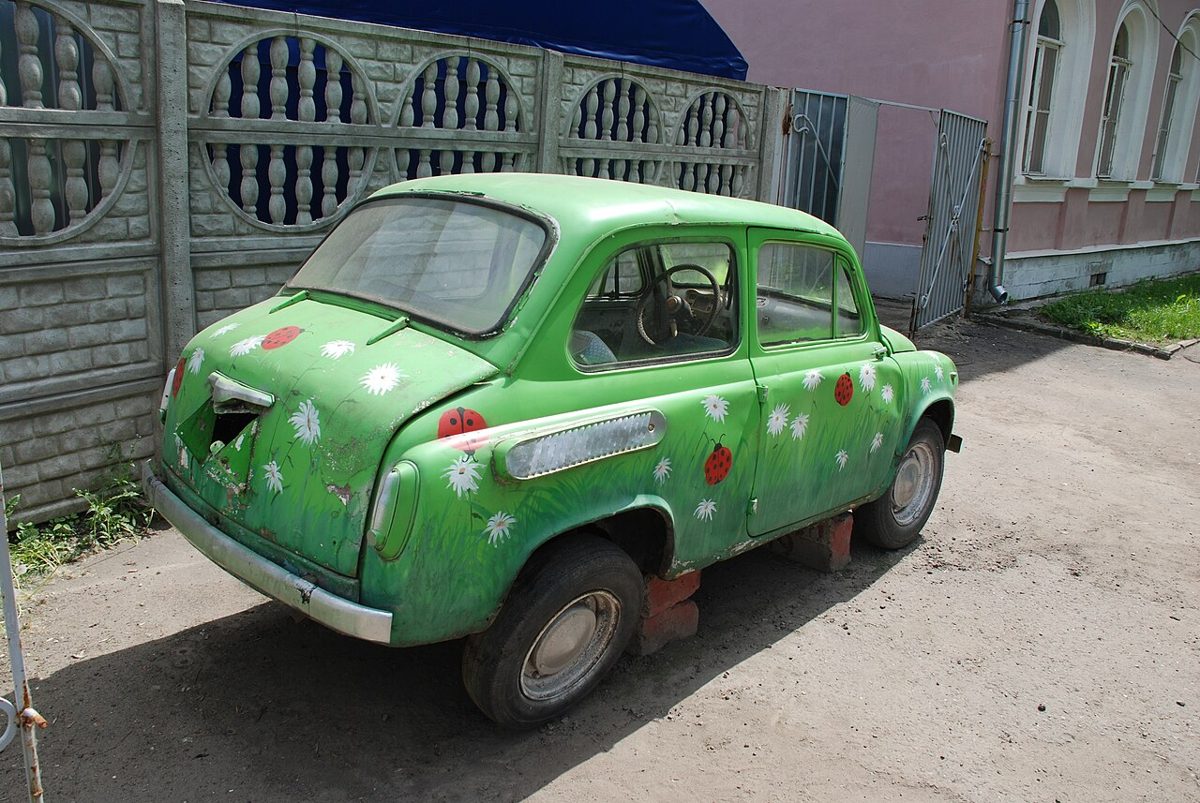
The cooling system is the heart of the ownership experience. Air is drawn in through louvres in the engine lid, pushed through the fan housing and ducted over the cylinders and heads before escaping underneath. Blocked fins, a slipping fan belt or missing tinware will cook a Zaporozhets engine faster than any other fault, exactly as with a Beetle. Owners learn to keep the fins clean, the thermostat flaps free and the belt tension right — and to listen for the change in fan note that tells them something is wrong.
Parts availability is better than you might expect. Because the same basic engine family served the 965, 966 and 968 for more than thirty years, mechanical components interchange across a wide range of cars, and a healthy aftermarket in Ukraine, Russia and Poland keeps pistons, gaskets, ignition parts and body panels in circulation. The Zaporozhets community is small but devoted, and forums and clubs in Kyiv, Lviv, Moscow and Warsaw are the best source of knowledge for anyone restoring one.
The ZAZ-966: A New Shape, Same Soul
By the mid-1960s the 965's rounded styling was looking dated, and ZAZ developed the ZAZ-966, which entered production in 1967. The new car kept the rear-mounted air-cooled V4 but wrapped it in a much more modern, squared-off body with a flat front panel, rectangular headlamps and a cleaner, more upright cabin. It was longer, wider and considerably more usable than the 965, with a proper boot lid at the front and better ventilation.
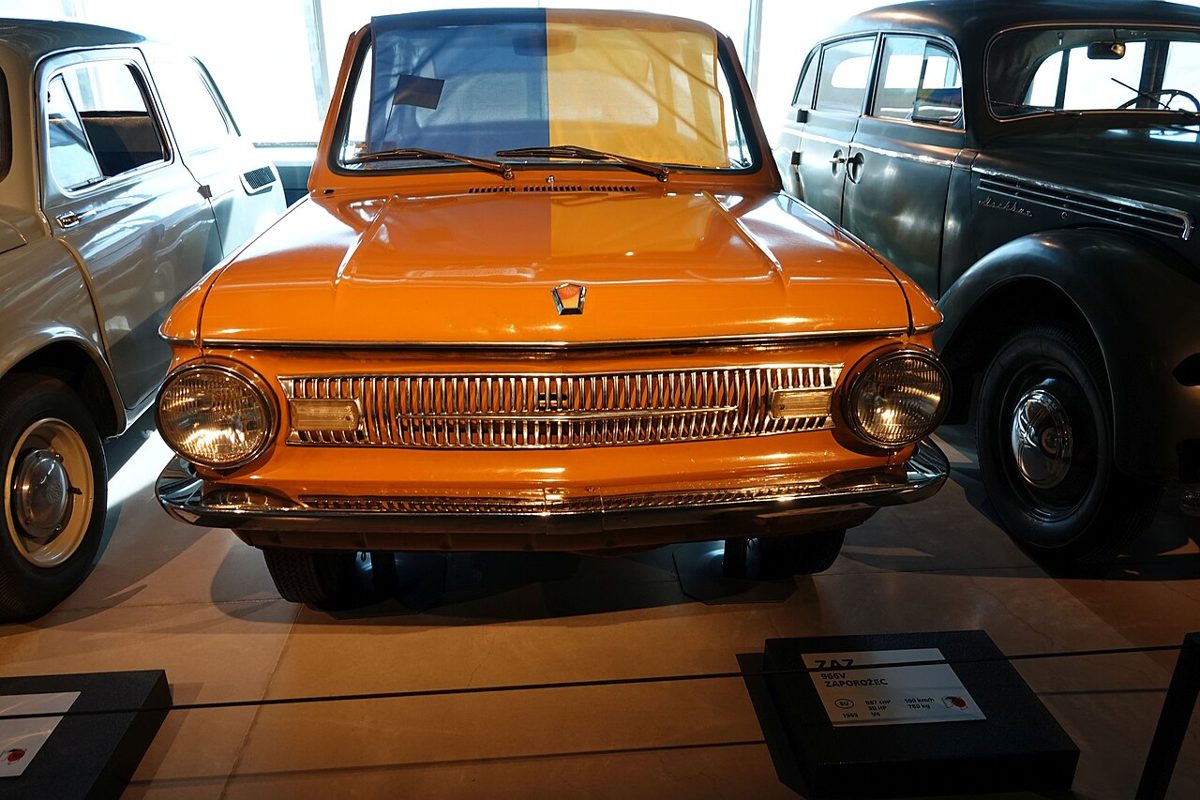
The 966 also brought meaningful mechanical progress. The engine grew to 1.2 litres and around 40–45 horsepower depending on version, giving the car genuine highway capability, and the electrical system moved to 12 volts. The ZAZ-966B, introduced in 1968, added a more powerful 1.2-litre engine and became the definitive version of the model. The car's flat, grille-less nose and clean flanks gave it a look that many enthusiasts now consider the most handsome of the Zaporozhets line.
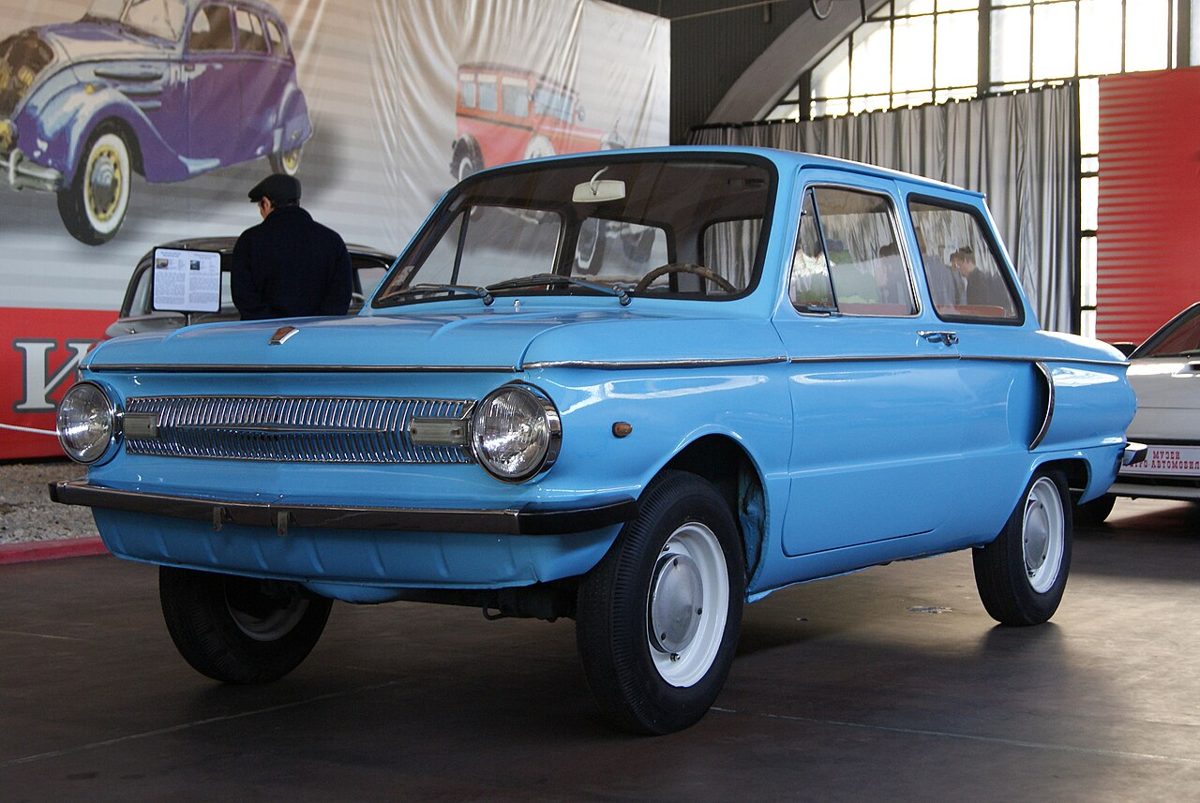
Production of the 966 ran until 1972, when it was replaced by the 968, but the 966 remained in service for decades and is now a favourite among collectors because it combines the air-cooled layout with a body that looks genuinely modern. Museum examples, such as the 1969 ZAZ-966B preserved at the Riga Motor Museum in Latvia, show just how neatly the package came together.
The ZAZ-968: The Long-Running Workhorse
The ZAZ-968 arrived in 1971 and became the Zaporozhets that most people actually remember. It was an evolution of the 966 with a revised 1.2-litre V4, a stronger body shell, improved brakes and a more comfortable interior. Over the next two decades it was built in several forms — the 968, the 968A, the 968B and finally the 968M — with detail changes to the engine, trim and safety equipment.
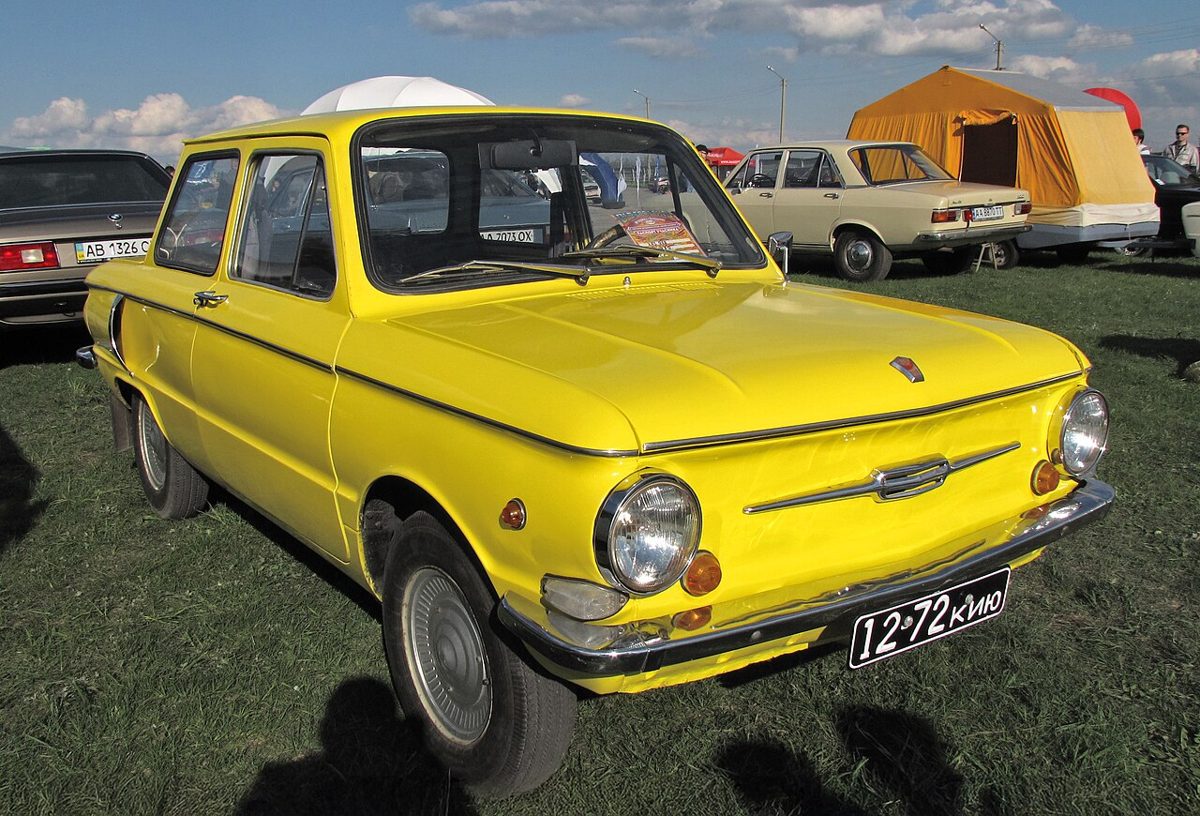
The 968 was the car that took the Zaporozhets to the far corners of the Soviet Union and beyond. It was sold across the Eastern Bloc, exported to Western Europe in modest numbers, and used everywhere from collective farms to city taxi fleets. Its reputation for simplicity and toughness was well earned: the engine would run on low-grade fuel, the suspension coped with terrible roads, and almost any fault could be fixed at the roadside. It was also, by the standards of the day, cheap to buy and cheap to run — the qualities that made the Beetle a global phenomenon.
For air-cooled enthusiasts the 968 is the sweet spot. It has enough power to keep up with modern traffic, a proper four-speed gearbox, better brakes than the early cars and a body that is still simple enough to work on at home. Restored examples now appear regularly at classic shows in Ukraine, Poland, the Baltic states and Germany, where they draw a crowd precisely because they are so rare outside their homeland.
The ZAZ-968M and the End of an Era
The final development, the ZAZ-968M, appeared in 1979 and stayed in production until 1994. It is easily recognised by its squared-off front end with rectangular headlamps, a new grille-less nose panel and a revised rear with larger tail lights. Underneath, the 968M kept the familiar air-cooled 1.2-litre V4, now with a little more power and improved cooling, and the car gained better seats, a more modern dashboard and improved sound insulation.
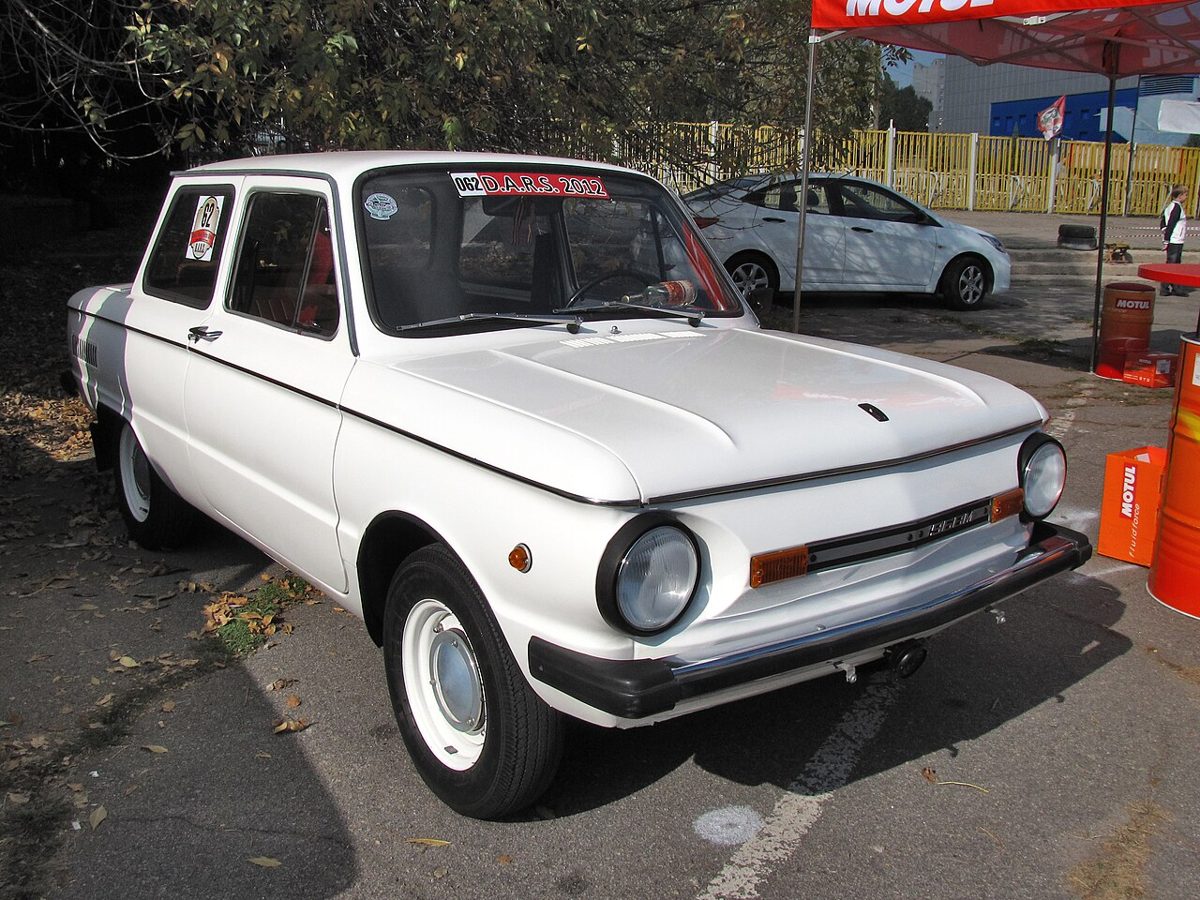
By the late 1980s the Zaporozhets was hopelessly out of date. Front-wheel-drive hatchbacks such as the ZAZ-1102 Tavria — itself a ZAZ product — offered more space, better economy and modern manners, and the collapse of the Soviet Union in 1991 left the plant scrambling for markets and components. The last air-cooled Zaporozhets rolled off the line in 1994, closing a chapter that had begun 34 years earlier. In that time ZAZ built well over three million Zaporozhets, making it one of the most numerous air-cooled cars ever produced anywhere in the world.
Motorsport, Culture and the Zaporozhets Legend
The Zaporozhets was never a racing car, but it did go racing. ZAZ and private teams campaigned modified 965s and 968s in Soviet rally and circuit events, and the cars' light weight and simple mechanicals made them surprisingly effective in the rough-road events that suited them. The most famous competition variant was the ZAZ-968M-based "Sport" prototype, built in small numbers with a tuned engine and lightweight bodywork. Today, historic rally events across Eastern Europe regularly feature Zaporozhets entries, and a well-driven 965 is a genuine crowd-pleaser on a tight, bumpy special stage.
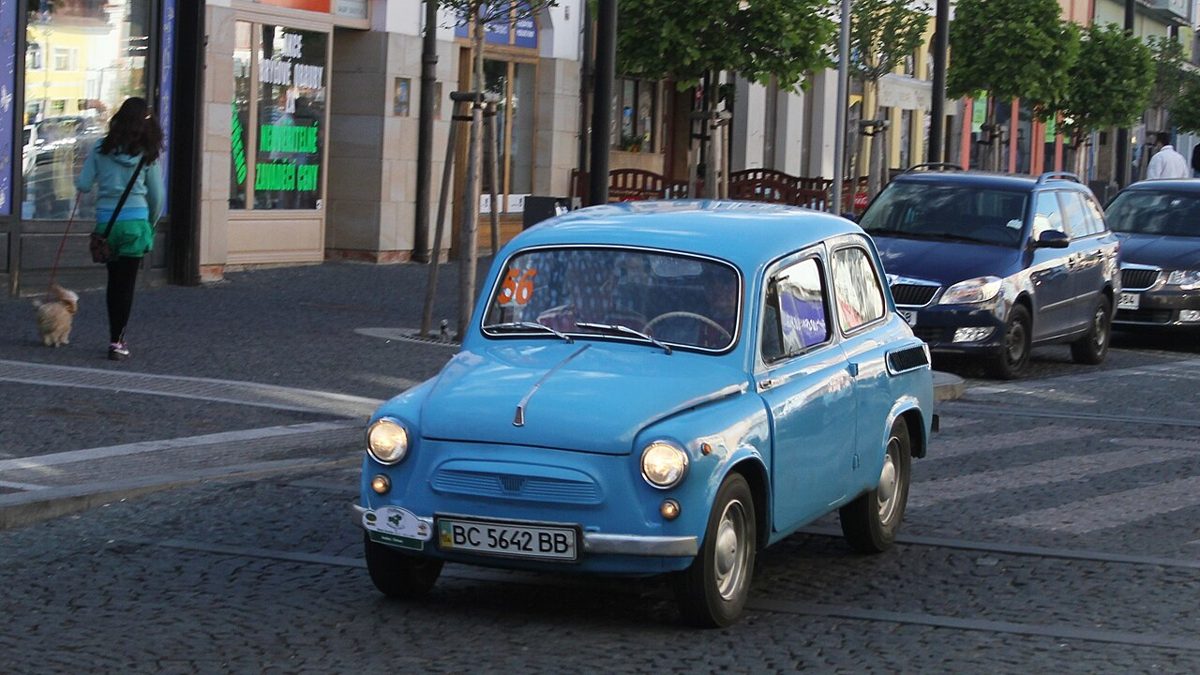
Culturally, the car is a fixture of Soviet and post-Soviet life. It appears in countless films, songs and jokes — the "humpbacked" Zaporozhets is a byword for a first car, a family heirloom and a machine that refuses to die. In Ukraine it has become a symbol of domestic engineering and of a shared past, and Zaporozhets owners' clubs keep that heritage alive with annual meets, rallies and restoration projects.
Why the Zaporozhets Matters to Air-Cooled Enthusiasts
If you love air-cooled cars, the Zaporozhets deserves a place in your mental garage alongside the Beetle, the 911, the Corvair and the 2CV. It is a reminder that air cooling was never a niche engineering curiosity — it was a global solution adopted by manufacturers from Wolfsburg to Zaporizhzhia, and each of them solved the same problems in their own way. The ZAZ V4 is a genuinely unusual engine: a compact, longitudinally mounted four with a single fan and a cooling layout all its own, and it rewards anyone who takes the time to understand it.
The cars are also a lesson in the value of simplicity. There is no ECU, no coolant, no turbocharger and no complex wiring loom. A Zaporozhets will teach you how an engine breathes, how a cooling system works and how a rear-engined chassis behaves, and it will do so at a fraction of the cost of a German classic. Parts are still findable, the community is welcoming, and the cars are different enough that you will never be just another Beetle at the show.
Above all, the Zaporozhets is fun. It is slow, loud, slightly eccentric and completely honest — a car that asks nothing more than regular maintenance and a sense of humour. Whether you are restoring a 965 in a garage in Lviv, hunting for a 968M in Poland or simply curious about the air-cooled world beyond Germany, the Zaporozhets is a wonderful place to start. Welcome to the humpbacked side of air cooling.
Image credits
- COVER — Front three-quarter view of a ZAZ-965 Zaporozhets in Ukraine, Novoklimov, via Wikimedia Commons (CC0)
- IMG1 — ZAZ-965 on display at the Moscow International Motor Show, 2003, Sergey Rodovnichenko from Moscow, Russia, via Wikimedia Commons (CC BY-SA 2.0)
- IMG2 — Rear engine bay of a ZAZ-965 showing the air-cooled V4, DL24, via Wikimedia Commons (CC0)
- IMG3 — Rear view of a ZAZ-965 on the street in Tver, showing the louvred engine lid, Bibikoff, via Wikimedia Commons (Public domain)
- IMG4 — Front view of a ZAZ-966 with its flat, grille-less nose, Sergey Rodovnichenko, via Wikimedia Commons (CC BY-SA 2.0)
- IMG5 — 1969 ZAZ-966B in the Riga Motor Museum, Latvia, Nenea hartia, via Wikimedia Commons (CC BY-SA 4.0)
- IMG6 — ZAZ-968 at the Old Car Land festival in Ukraine, 2018, Novoklimov, via Wikimedia Commons (CC0)
- IMG7 — ZAZ-968M in white, the final air-cooled Zaporozhets, Novoklimov, via Wikimedia Commons (CC0)
- IMG8 — A 1968 ZAZ-965 at the 2013 Oldtimer Bohemia Rally, Mlada Boleslav, M.Rejha, via Wikimedia Commons (CC BY-SA 3.0)