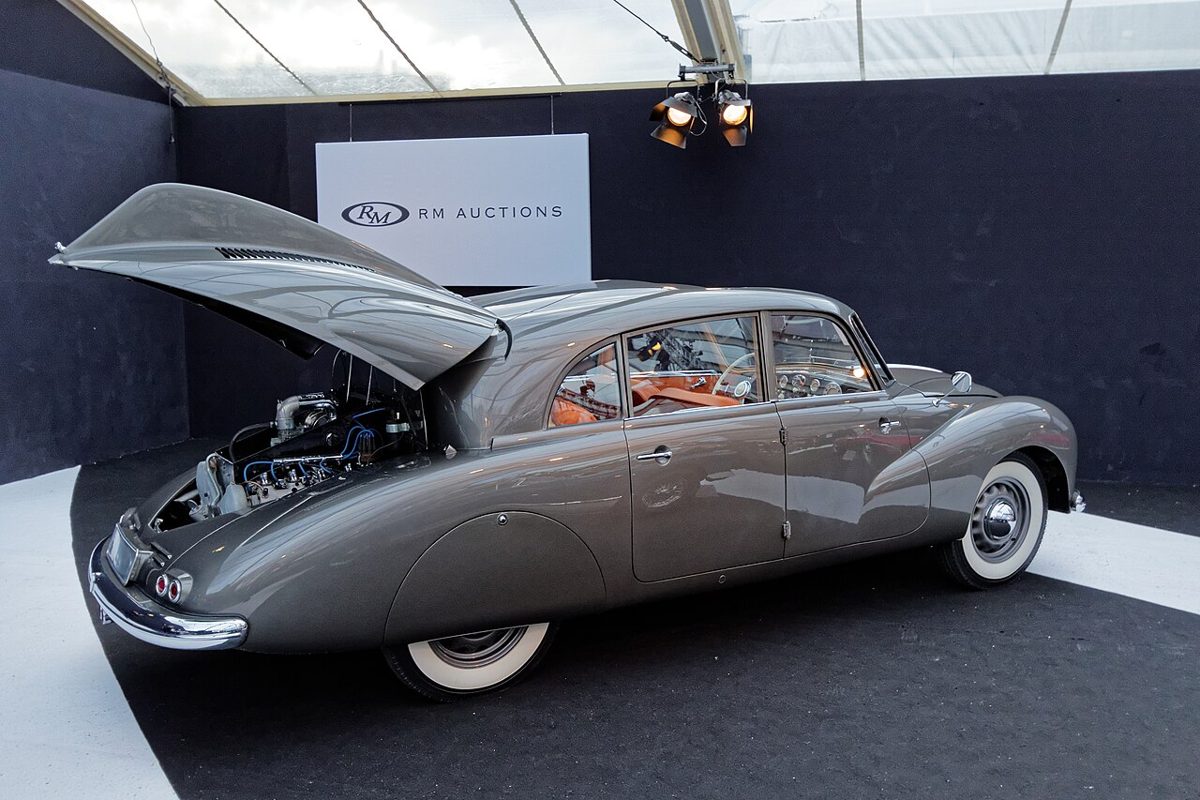
Tatra is a name that commands immediate respect in the world of engineering, standing as one of the oldest and most innovative vehicle manufacturers in history. Born in the town of Kopřivnice, Moravia, the company transition from building carriages to pioneering some of the most advanced automotive technologies of the 20th century. While most of the world settled on water-cooled engines and ladder frames, Tatra forged its own path, creating a legacy defined by air-cooled powerplants and a revolutionary backbone chassis. This unique engineering DNA, characterized by simplicity, durability, and a relentless pursuit of aerodynamic efficiency, not only made Tatra a favorite among explorers and high-ranking officials but also left an indelible mark on the global automotive landscape.
The Ledwinka Legacy and the Backbone Revolution
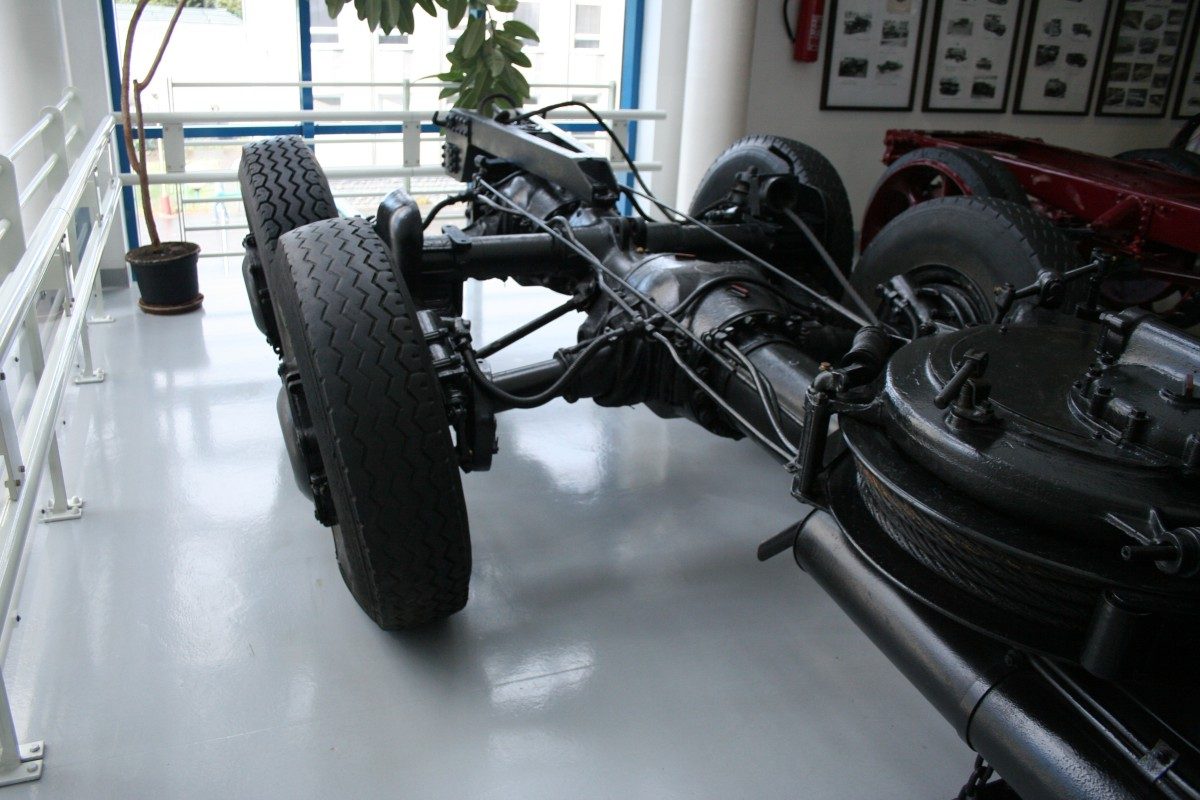 The story of Tatra’s air-cooled dominance is inextricably linked to the genius of Hans Ledwinka. Returning to the company in 1921, Ledwinka sought to dismantle the conventional wisdom of car design. At the time, most automobiles were heavy, cumbersome machines built on flimsy ladder frames that struggled with the poor road conditions of Central Europe. Ledwinka’s solution, first seen in the 1923 Tatra 11, was the "Tatra Concept." He replaced the traditional frame with a central tubular backbone—a rigid spine that protected the driveshaft and provided immense torsional stiffness. To this, he mated independent swinging half-axles, allowing the wheels to move freely over rough terrain while maintaining stability. This chassis was not just a structural triumph; it was a modular platform that would underpin everything from small cars to massive heavy-duty trucks for the next century.
Ledwinka’s other great contribution was his unwavering commitment to air-cooling. The Tatra 11 featured a simple, reliable 1.1-liter flat-twin engine that required no radiator, no hoses, and no water pump. By eliminating the liquid cooling system, Ledwinka removed the most common points of failure in an era when cars frequently overheated or suffered from frozen blocks in winter. The T11 and its successor, the T12, proved that a lightweight, air-cooled vehicle with a superior suspension could outperform much larger and more expensive rivals. Over 11,000 units of the T11 and T12 were produced, establishing Tatra as a force to be reckoned with and providing the financial foundation for the company’s most ambitious projects.
The T77: A Silent Revolution in the Wind
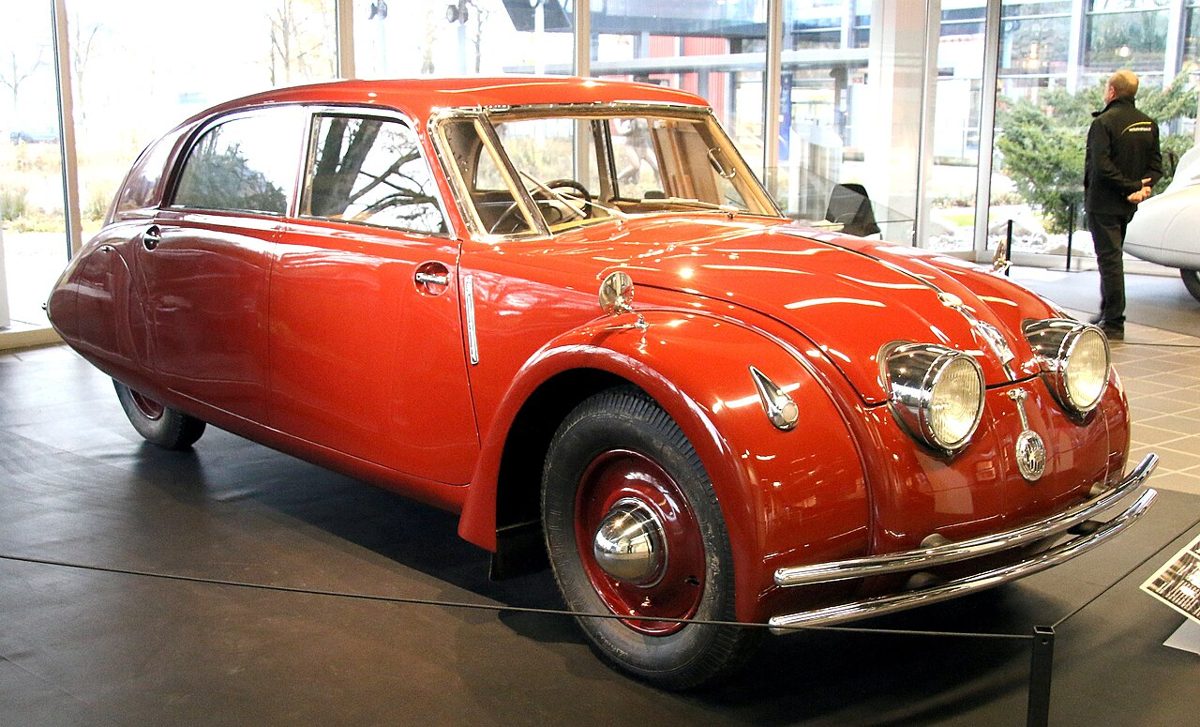 In 1934, Tatra shocked the world with the introduction of the T77. Developed by Ledwinka, Erich Übelacker, and the legendary aerodynamicist Paul Jaray, the T77 was the first serial-produced automobile designed with a primary focus on aerodynamics. Its teardrop shape, characterized by a smooth, sloping tail and a large central fin for stability, was a radical departure from the boxy shapes of the era. The T77 achieved a drag coefficient of just 0.245—a figure that remains impressive for modern cars today. This streamlining was not just for show; it allowed the large, luxury sedan to reach high speeds with relatively modest power, making it a pioneer of the "grand touring" concept before the term was even popularized.
Underneath the T77’s futuristic skin beat an air-cooled V8 engine. Mounted in the rear to eliminate the need for a long driveshaft and to allow for a lower, more aerodynamic front profile, the 2,970cc (later 3.4-liter) engine was a masterpiece of lightweight construction. Utilizing magnesium alloys and featuring overhead valves, the V8 produced 60 to 75 horsepower. The rear-engine, air-cooled layout became a Tatra hallmark, providing excellent traction and a quiet cabin, though it did require a skilled driver to manage the weight bias in corners. Only 255 T77s were built, making them some of the most sought-after collector cars in the world, representing the dawn of the streamlined age.
The T87: The Autobahn’s Silver Bullet
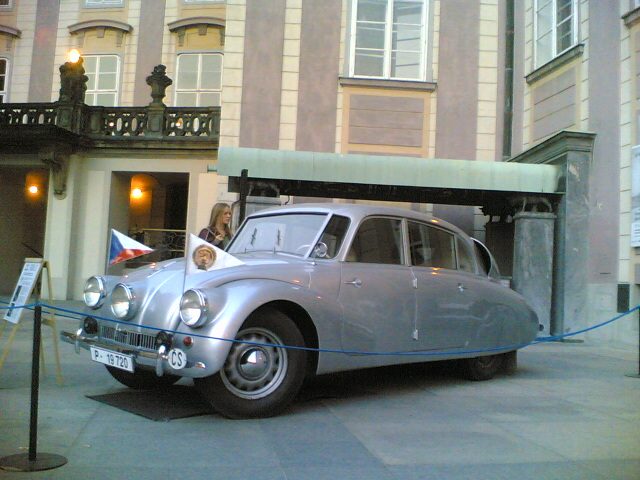 Building on the lessons learned from the T77, Tatra launched the T87 in 1936. This model is widely considered Hans Ledwinka’s masterpiece. While it retained the rear-engine V8 and the aerodynamic fastback shape, the T87 was shorter, lighter, and more refined than its predecessor. The engine was an all-new 2.9-liter air-cooled V8, notable for its overhead camshafts and hemispherical combustion chambers—decades before "Hemi" became a marketing buzzword in Detroit. This sophisticated engine produced 85 horsepower, enough to propel the T87 to a top speed of nearly 100 mph (160 km/h). At a time when most cars struggled to maintain 60 mph, the Tatra T87 was a true high-speed cruiser, earning it the nickname "Autobahnmobil."
The T87’s durability became legendary. In the late 1940s, Czech explorers Jiří Hanzelka and Miroslav Zikmund took a T87 on a grueling expedition across Africa and South America. They covered thousands of miles of trackless desert and dense jungle, proving that the air-cooled V8 could handle the most extreme temperatures on Earth without failing. The car’s unique three-headlight design and prominent dorsal fin became iconic, symbolizing a perfect marriage of form and function. With over 3,000 units produced, the T87 brought Tatra’s high-tech luxury to a broader, albeit still elite, audience, cementing its place as one of the greatest automobiles of all time.
The T97 and the Shadow of the Beetle
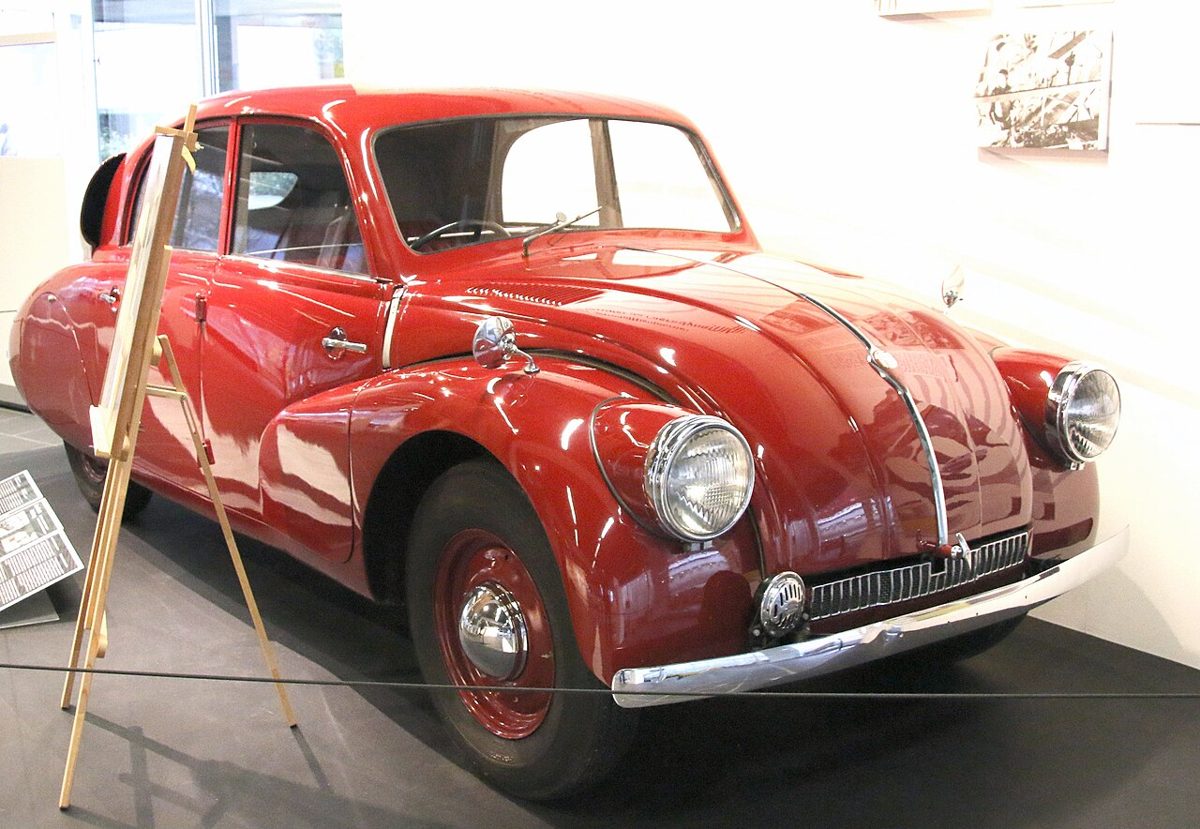 While the V8 models were the flagships, Tatra also recognized the need for a smaller, more accessible aerodynamic car. The T97, introduced in 1936 alongside the T87, was designed to fill this gap. It featured a scaled-down version of the streamlined body, powered by a 1.8-liter air-cooled flat-four engine. Like its larger siblings, it utilized the central backbone chassis and independent suspension. The T97 was a brilliant piece of engineering, offering advanced aerodynamics and a top speed of 80 mph in a package that was much easier to manage than the heavy V8s. However, its production was cut short by the political turmoil of the late 1930s, with only 508 units completed before the German occupation forced the factory to stop production.
The T97’s legacy is often overshadowed by its striking resemblance to the original Volkswagen Beetle. Ferdinand Porsche and Hans Ledwinka were contemporaries and friends who frequently discussed their design philosophies. The similarities between the T97 and the early KdF-Wagen (the Beetle's precursor)—including the rear-mounted air-cooled engine, the streamlined shape, and the central tunnel chassis—were so significant that Tatra filed a lawsuit against Volkswagen for patent infringement. The suit was suppressed during the German occupation but was eventually settled in 1961, with Volkswagen paying Tatra 3 million Deutsche Marks. While the Beetle became the world’s most produced car, the T97 remains the "missing link" that shows where many of its most iconic features truly originated.
Post-War Rebirth: The T600 Tatraplan
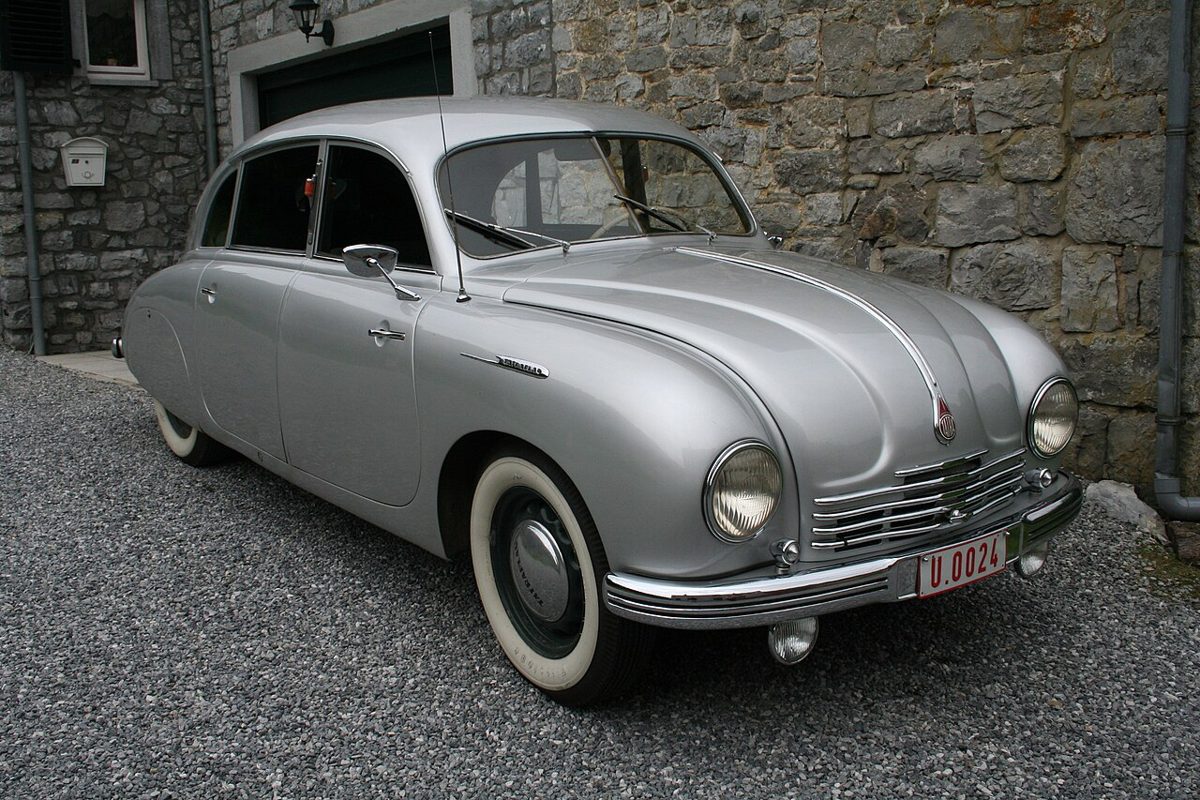 After World War II, Tatra faced a new reality under Czechoslovakia’s nationalized economy. The company was tasked with creating a new car that reflected the spirit of the planned economy, leading to the birth of the T600, better known as the Tatraplan. Launched in 1947, the Tatraplan continued the aerodynamic tradition with a beautifully smooth, four-door body. It returned to the four-cylinder layout of the T97 but with a larger, 1.9-liter air-cooled engine producing 52 horsepower. The design was exceptionally efficient, achieving a drag coefficient of 0.32, which helped the car reach a respectable top speed of 81 mph while maintaining excellent fuel economy for a sedan of its size.
The Tatraplan was a success, both at home and abroad, with many units exported to Western Europe and even North America. However, the political climate of the Cold War soon intervened. In 1951, the Czechoslovak government ordered that passenger car production at the Kopřivnice plant be stopped so the factory could focus entirely on trucks. Production of the Tatraplan was briefly moved to the Skoda plant in Mladá Boleslav, but the quality suffered, and the model was eventually phased out in 1952. Despite its relatively short life, the Tatraplan proved that the Ledwinka formula was still relevant in the post-war era, and its elegant lines remain a favorite among Tatra enthusiasts today.
The Communist Luxury: The T603 V8
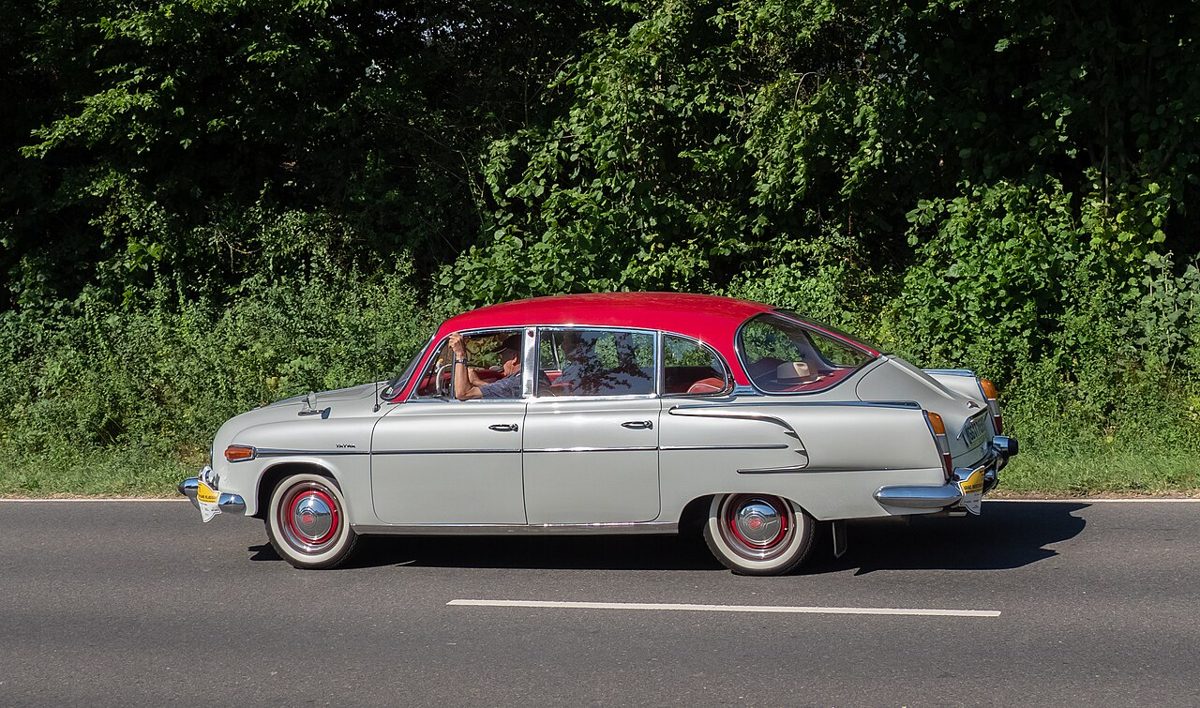 By the mid-1950s, the Czechoslovak leadership realized they needed a car that could compete with the luxury sedans of the West for use by high-ranking officials and diplomats. Tatra designers, who had been working in secret on a new V8 project, were given the green light to develop the T603. Introduced in 1956, the T603 was a return to the glory days of the air-cooled V8 luxury sedan. Its design was a masterpiece of mid-century modernism, featuring a rounded, aerodynamic shape and a unique three-headlight cluster located behind a single glass panel (later replaced by four headlights). The T603 was not just a car; it was a symbol of state power and engineering pride.
The heart of the T603 was a new 2.5-liter air-cooled V8. Designed by Julius Mackerle, this engine was light, compact, and remarkably smooth. It utilized a unique cooling system with two large fans driven by belts from the crankshaft, ensuring that the engine stayed cool even during long idling periods—a common occurrence for state limousines. Over its 20-year production run, the T603 was continuously refined, with production reaching nearly 20,500 units. It was a common sight at political rallies and diplomatic events across the Eastern Bloc, and even found success in international rallies, where its rugged construction and air-cooled reliability allowed it to compete against far more nimble sports cars. The T603 remains perhaps the most recognizable Tatra, a testament to the brand’s ability to innovate under even the most restrictive conditions.
The Final Evolution: T613 and T700
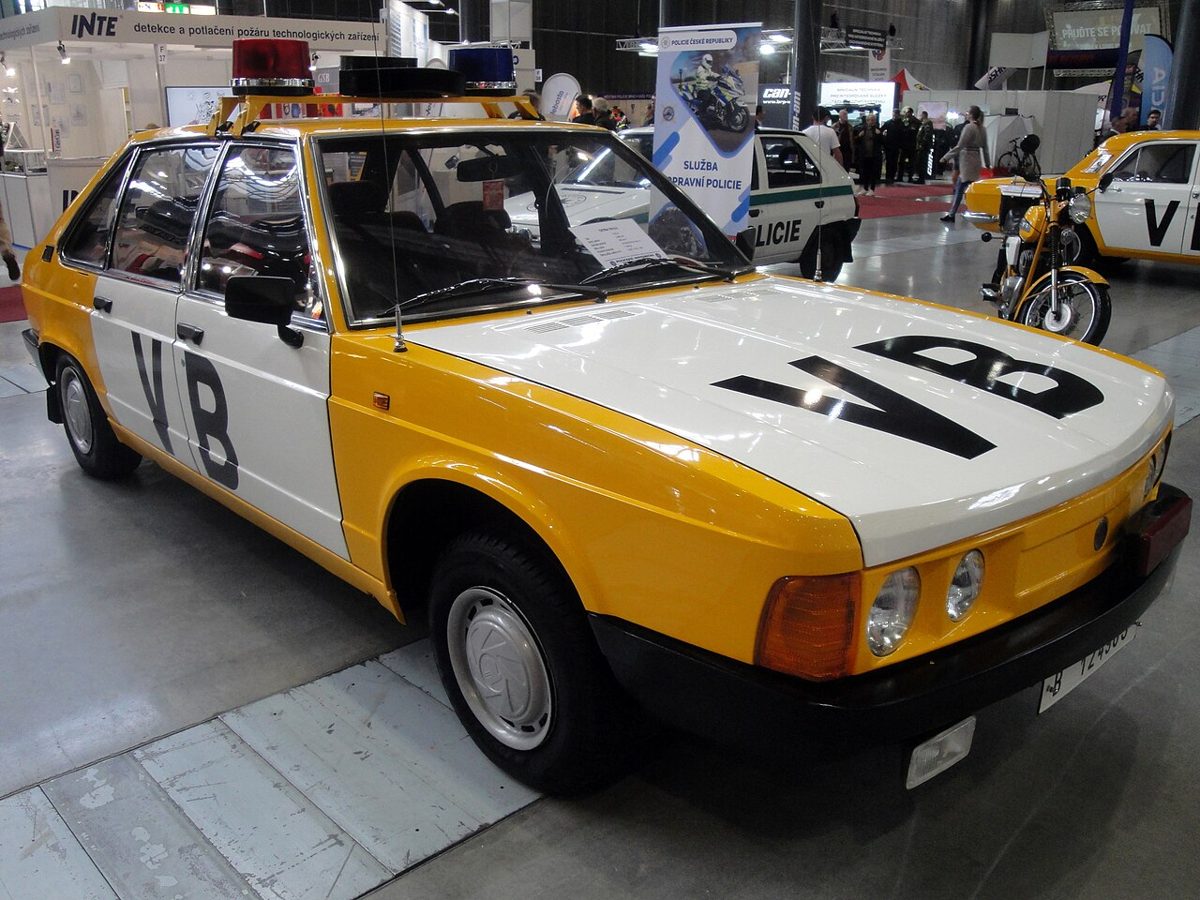 As the 1960s came to a close, Tatra recognized that the rounded, aerodynamic shapes of the past were falling out of fashion. They turned to the Italian design house Vignale to create a modern successor to the T603. The result was the T613, introduced in 1974. The T613 was a radical departure in styling, featuring a sharp, angular body that was very much in tune with the trends of the 1970s. However, beneath the new skin, it remained a true Tatra. It was powered by a 3.5-liter air-cooled V8, now featuring dual overhead camshafts and producing up to 168 horsepower. Crucially, the engine was moved slightly forward from its traditional position behind the rear axle to a position directly over the axle, significantly improving the car’s handling and stability.
The T613 stayed in production for over two decades, outlasting the Communist regime that commissioned it. After the Velvet Revolution in 1989, Tatra attempted to modernize the T613 for the new market economy, leading to the T700 in 1996. The T700 was essentially a heavily updated T613, featuring more rounded body panels and a more luxurious interior, but the basic architecture was over 20 years old. With a 3.5 or 4.4-liter air-cooled V8, it was a unique offering in a world of water-cooled, front-engine luxury cars. Unfortunately, Tatra could not compete with the massive R&D budgets of companies like BMW and Mercedes-Benz. Only 75 T700s were built before passenger car production finally ended in 1999. It was a quiet end to a glorious century, but the T700 remains a fascinating footnote—the last air-cooled V8 luxury car ever produced.
Unstoppable Power: Tatra’s Air-Cooled Trucks
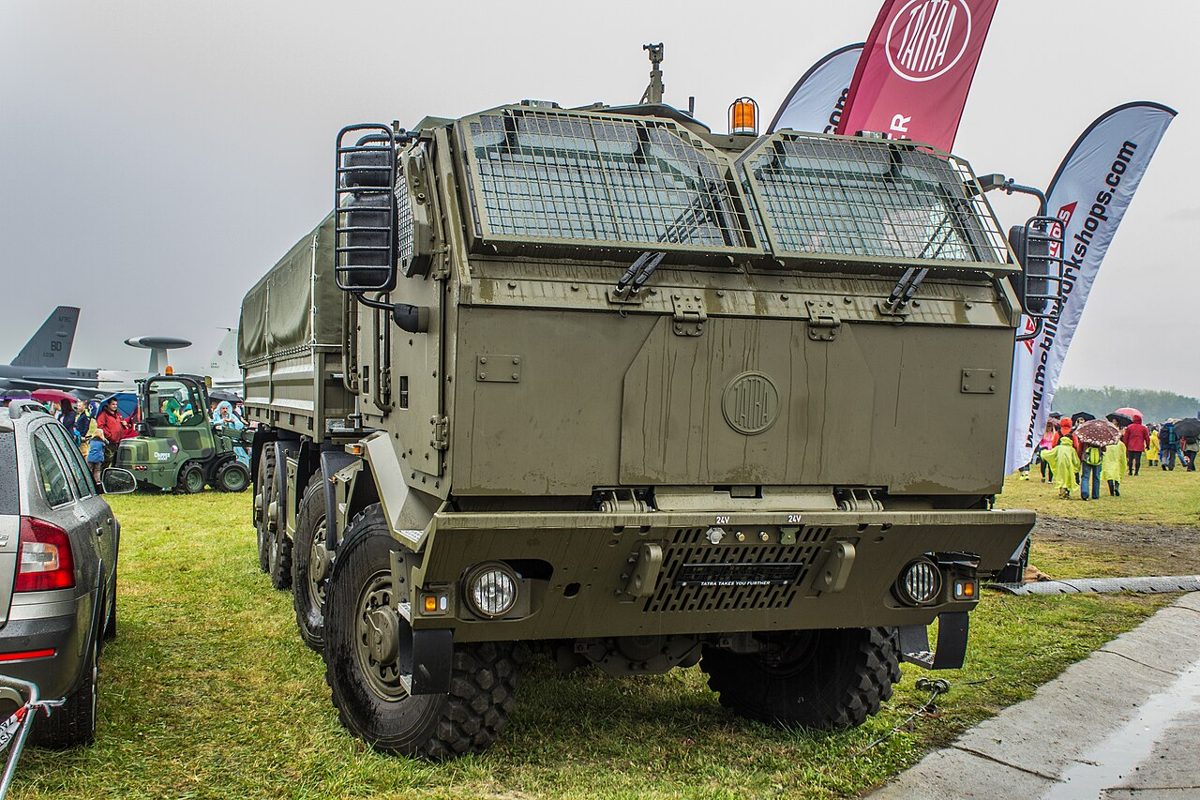 While the passenger cars were the glamorous faces of the brand, it was the heavy-duty trucks that provided Tatra’s enduring success. The same principles that Hans Ledwinka applied to the T11—the central backbone chassis and air-cooled engines—proved to be even more effective for heavy haulage. During World War II, the T111 became legendary for its ability to operate in the sub-zero temperatures of the Eastern Front, where water-cooled trucks were rendered useless by frozen radiators. Its air-cooled V12 diesel engine was a masterpiece of rugged engineering, capable of pulling heavy loads over terrain that would swallow other vehicles whole.
In the post-war era, models like the T138, T148, and the ubiquitous T815 cemented Tatra’s reputation as the premier manufacturer of off-road trucks. The combination of the rigid backbone tube, which protects all internal drivetrain components, and the independent swing-axle suspension allows Tatra trucks to maintain high speeds over rough ground while keeping all wheels in contact with the surface. Today, Tatra trucks are a dominant force in the Dakar Rally and are used in the most demanding industries, from mining to firefighting. While the cars are gone, the air-cooled spirit lives on in these mechanical giants, continuing a tradition of engineering excellence that refuses to be tamed by the elements.
The legacy of Tatra is a reminder that the path less traveled—though fraught with challenges—often leads to the most remarkable destinations in the history of the machine.
Image credits
- Tatra backbone chassis on display — Kornatka at Polish Wikipedia, CC BY 2.5
- A sleek Tatra T77 profile — Steve Knight (kitmasterbloke), CC BY 2.0
- Tatra T87 front view — Crwpitman, CC BY-SA 2.0
- Tatra T97 front view — Steve Knight (kitmasterbloke), CC BY 2.0
- Tatra T600 Tatraplan on the road — Jean-Pol GRANDMONT, CC BY 3.0
- Tatra 603 with its distinctive front — Reinhold Möller, CC BY-SA 4.0
- Tatra 613 police car — Reise Reise, CC BY-SA 4.0
- Tatra 815 8x8 heavy truck — Zabdas, CC BY-SA 4.0
- Cover: 1948 Tatra T87 at auction — Thesupermat, CC BY-SA 4.0